Asplenium nidus With Falling Fronds: A Gentle Warning
Asplenium nidusAsplenium nidus
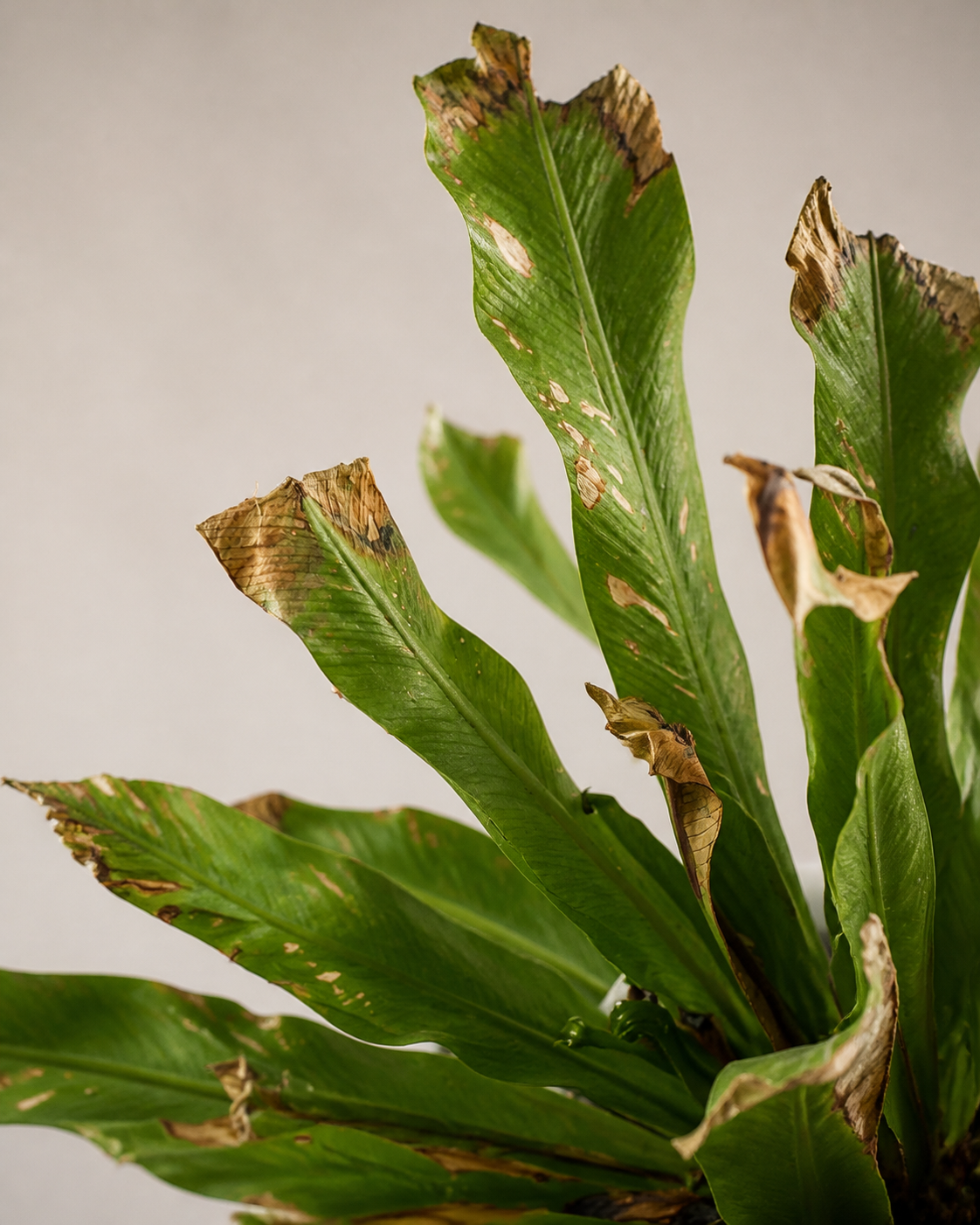
DIAGNOSIS
This Asplenium nidus is showing a moderate frond-drop pattern, a common sign that its growing conditions have drifted away from what bird’s nest ferns tolerate well. In most cases, shedding happens when moisture levels fluctuate, the root zone stays stressed, or the plant reacts to changes in light, temperature, or handling.
PLAN FOR THE COMING DAYS
- 01
Keep the soil evenly lightly moist, never bone dry or waterlogged.
- 02
Move the plant to bright indirect light and avoid direct sun.
- 03
Protect it from drafts, heat blasts, and sudden temperature swings.
- 04
Trim only fully spent fronds and do not damage the central crown.
FIELD NOTES
Asplenium nidus, often called the bird’s nest fern, does not usually drop fronds without a reason. When it begins shedding older or even mid-aged fronds at a moderate pace, the plant is telling you that something in its environment is inconsistent. This is less a dramatic crisis than a useful warning: the fern is spending energy on survival instead of steady growth.
Why it happens
Frond drop in Asplenium nidus most often follows stress around water and roots. The plant prefers evenly lightly moist soil, not prolonged dryness and not a heavy, airless potting mix that stays wet for too long. When the root zone repeatedly swings between too dry and too wet, the fern may let go of fronds it can no longer support efficiently.
Environmental shifts also matter. A sudden move to brighter light, exposure to drafts, cooler nights, hot dry indoor air, or frequent repositioning can all interrupt the plant’s balance. Because this fern grows from a central rosette, it tends to react clearly when its routine changes: weakened fronds yellow, soften, or detach more easily.
How to recognize it
Moderate drop usually looks like a noticeable but not catastrophic loss of foliage. You may see a few fronds aging faster than expected, tips browning before the whole frond declines, or leaves loosening after a recent care change. The center may still look alive, which is important: if fresh growth remains intact, recovery is often possible with steadier conditions.
It helps to distinguish normal aging from stress-related shedding. An occasional older frond fading at the base is natural. A cluster of fronds dropping within a short period, especially after irregular watering or a location change, points more strongly to care imbalance.
Recovery plan
The goal is not to overcorrect. Instead, stabilize the plant. Check whether the soil is drying out completely between waterings or staying soggy for long stretches. Review light levels as well: bright indirect light is usually best, while direct sun can scorch fronds and deep shade can weaken them over time.
If the plant was recently repotted, moved, or exposed to temperature swings, give it a calmer routine before making more changes. Remove fully spent fronds, but avoid damaging the central crown. New fronds emerge from that center, and keeping it protected is more important than making the plant look instantly tidy.
Prevention
Asplenium nidus responds best to consistency. Stable moisture, gentle humidity, moderate warmth, and filtered light reduce the chance of further drop. Rather than chasing fast improvement, think in terms of restoring a reliable pattern the plant can trust.
Once the environment becomes predictable again, frond loss often slows first, and only later does fresh growth resume. That quieter recovery is usually the best sign that the fern has stopped reacting and started settling in.
IN THE OWNER'S WORDS
“I thought it was just shedding an old leaf or two, then realized the room and watering routine had both changed at once.”
COMMON QUESTIONS
0401Why is my Asplenium nidus dropping fronds?
Most often, frond drop in Asplenium nidus is linked to inconsistent moisture, root stress, sudden environmental changes, or unsuitable light.
02Is it normal for a bird’s nest fern to lose leaves?
An occasional older frond aging and fading is normal. Noticeable loss of several fronds over a short period usually suggests stress rather than routine aging.
03Can Asplenium nidus recover after dropping fronds?
Yes, recovery is often possible if the central crown remains healthy and the plant is returned to stable moisture, gentle warmth, and bright indirect light.
04Should I remove damaged fronds from Asplenium nidus?
You can remove fully spent fronds, but avoid cutting into healthy tissue near the center. Protecting the crown is essential for future growth.