Calibrachoa × hybrida Leaves Losing Color and Vigor
Calibrachoa hybridaCalibrachoa hybrida
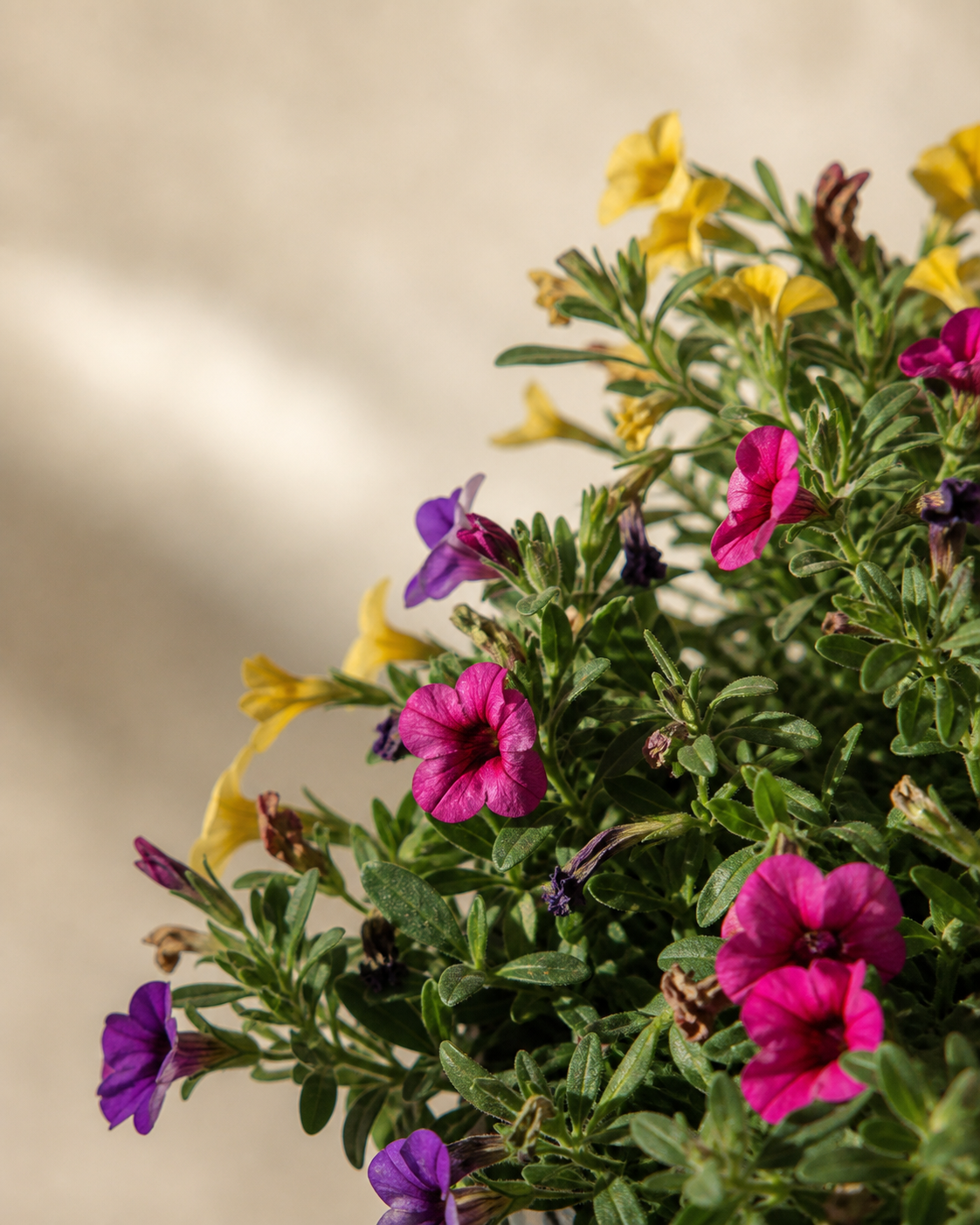
DIAGNOSIS
This moderate leaf issue in Calibrachoa × hybrida points to general stress expressed through declining foliage quality rather than a single dramatic disease sign. In calibrachoa, leaf problems often develop when watering, root oxygen, nutrition, and light fall out of balance, so the plant redirects energy away from vigorous leaf maintenance.
PLAN FOR THE COMING DAYS
- 01
Check that the pot drains freely and is not staying waterlogged.
- 02
Water evenly, avoiding both constant sogginess and hard dry-outs.
- 03
Move the plant into stronger light if conditions are too dim.
- 04
Resume regular feeding with a balanced fertilizer for flowering plants.
FIELD NOTES
Calibrachoa × hybrida is valued for dense flowering and fine, fresh foliage, so leaf decline is often the first sign that the plant’s growing conditions have drifted out of balance. When the leaves begin to lose color, strength, or uniform texture, the problem is usually not random. It is the plant’s way of showing that root function and top growth are no longer working in sync.
Why it happens
Moderate leaf problems in calibrachoa commonly begin below the soil line. If the root zone stays too wet for too long, roots struggle to access oxygen, and the foliage responds by looking tired, pale, or generally weakened. On the other hand, repeated drying can also stress the plant, especially in containers, where moisture swings happen quickly.
Nutrition is another frequent factor. Calibrachoa is a heavy performer, and once growth and flowering accelerate, uneven feeding can show up first in the leaves. Low nutrient availability, poor uptake in stressed roots, or an imbalanced potting mix can all reduce leaf quality. Light also matters: without enough sun, the plant cannot sustain compact, energetic growth, and the foliage may become sparse or dull.
How to recognize it
A moderate leaf issue is not total collapse. The plant is still recoverable, but it no longer looks fully vigorous. Leaves may appear faded, less turgid, smaller than expected, or generally off-color. The canopy may look thinner, and the plant may seem slower to push fresh growth.
What matters most is the pattern. If many leaves are affected at once, and there is no clear chewing damage or distinct spotting pattern, a cultural stress response is more likely than isolated physical injury. In calibrachoa, that usually means checking the root environment before assuming a more exotic cause.
Recovery plan
Start with the container or planting area. Make sure excess water can move through freely and that the root zone is not remaining dense and saturated. Then bring watering back to a steadier rhythm: not constantly wet, not allowed to swing bone-dry. Consistency helps the plant rebuild functional roots, and healthier roots support better leaves.
Next, review light and feeding. Calibrachoa performs best with strong light and regular nutrition. If it has been sitting in dim conditions or relying on exhausted potting media, improving those basics often leads to better new foliage. Recovery will usually appear first in fresh growth rather than in older damaged leaves, so watch the newest leaves for signs of improvement.
Prevention
The best prevention is stable care. Use an airy growing medium, avoid long periods of waterlogging, and do not let containers repeatedly dry out to extremes. Keep the plant in bright conditions and support active growth with a steady feeding routine suited to flowering annuals. When the root zone, moisture level, and light exposure stay balanced, calibrachoa is much more likely to hold dense, healthy foliage through the season.
IN THE OWNER'S WORDS
“I thought the plant was just tired from blooming, but the leaves showed me the roots and routine needed attention.”
COMMON QUESTIONS
0401Why are my calibrachoa leaves turning pale?
Pale leaves often reflect general stress from inconsistent watering, poor root aeration, low nutrient uptake, or insufficient light rather than one isolated cause.
02Can overwatering cause leaf problems in Calibrachoa × hybrida?
Yes. When the root zone stays too wet, roots receive less oxygen, and leaf quality often declines as the plant struggles to support healthy top growth.
03Will damaged calibrachoa leaves recover?
Older affected leaves may not return to perfect condition. Improvement is usually seen first in new growth once watering, drainage, light, and feeding are corrected.
04Does calibrachoa need full sun for healthy leaves?
It performs best in strong light. In dimmer conditions, growth can weaken and the foliage may lose density and color.