Catalpa bignonioides With Sudden Leaf Drop in Late Season
Catalpa bignonioidesCatalpa bignonioides
DIAGNOSIS
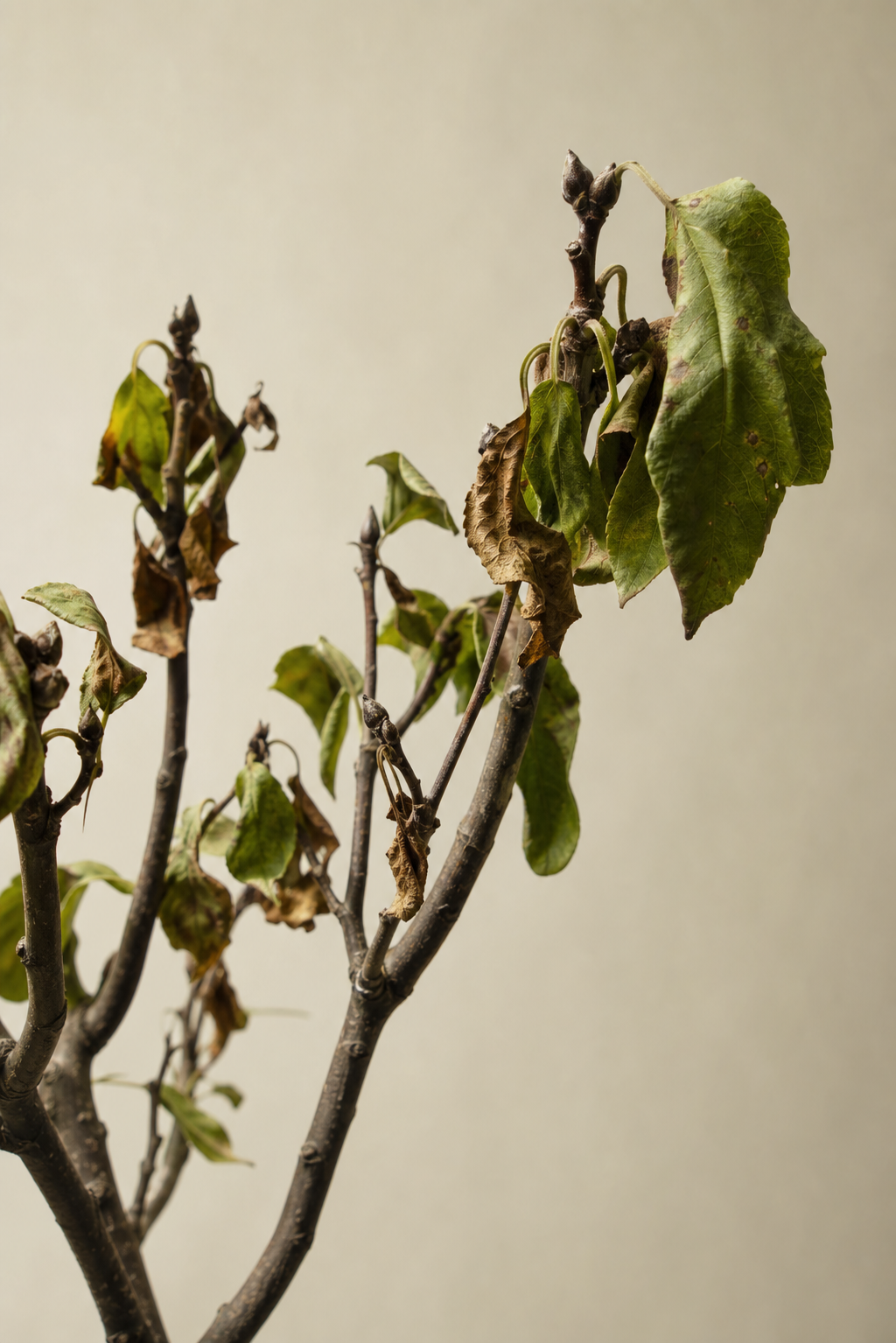
This Catalpa bignonioides is experiencing critical leaf drop, a sign that the tree is under major physiological stress rather than dealing with a minor cosmetic issue. In catalpa, rapid shedding most often follows disruption in water balance, root function, or sudden environmental pressure, leaving the plant unable to support its canopy normally.
PLAN FOR THE COMING DAYS
- 01
Check soil moisture before every watering.
- 02
Keep moisture even; avoid drought and saturation.
- 03
Improve drainage if water stands around roots.
- 04
Pause fertilizer and heavy pruning during leaf drop.
FIELD NOTES
Catalpa bignonioides is a generous, broad-leaved tree, so sudden leaf drop tends to look dramatic fast. When the problem reaches a critical level, the falling foliage is usually not the disease itself but the tree’s response to stress. In practical terms, the plant is reducing leaf area because it can no longer keep the canopy supplied with enough water and energy.
Why it happens
In catalpa, severe leaf drop is commonly tied to breakdowns in water movement through the plant. That may begin below ground, where compacted soil, damaged roots, poor drainage, or irregular watering reduce root performance. It can also begin above ground when hot wind, abrupt temperature shifts, or transplant shock push the tree to lose moisture faster than the roots can replace it.
The result is the same: the tree sheds leaves to limit demand. This is why heavy drop can appear quickly even when the original trigger developed more gradually. A catalpa that was coping for days or weeks may suddenly cross a threshold and begin dropping foliage in large numbers.
How to recognize it
Critical stress leaf drop usually shows up as a broader canopy event, not just a few aging leaves. You may notice leaves yellowing, browning at the edges, curling, softening, or falling while still partly green. The soil may seem either persistently wet or too dry between waterings, both of which point to root-zone imbalance rather than a simple seasonal change.
Context matters. If the drop follows recent heat, wind, replanting, root disturbance, or inconsistent watering, the pattern strongly supports stress-related shedding. If many leaves fall at once and the tree looks thinner every day, treat it as a whole-plant care issue.
Recovery plan
Because no care actions were provided in the source schedule, the safest editorial guidance is conservative: stabilize conditions instead of making aggressive changes. Check soil moisture before watering, and avoid swinging between drought and saturation. If drainage is poor, reduce standing moisture around the root zone rather than adding more water on a fixed routine.
Hold off on fertilizer, hard pruning, or other stimulating interventions while the tree is actively shedding. Those measures can increase demand on a system that is already struggling. Focus instead on consistency: even moisture, reduced disturbance, and time for the roots to recover. If the drop continues and dieback spreads through branches, the underlying root or site problem is likely still unresolved.
Prevention
Catalpa bignonioides handles seasonal change better when its roots stay in a stable environment. Deep but measured watering, breathable soil, and protection from repeated stress swings help the tree hold its leaves longer. Prevention is less about pushing growth and more about avoiding the extremes that force the tree into emergency leaf loss.
IN THE OWNER'S WORDS
“I thought it was just a few tired leaves, and then the whole tree seemed to thin out almost overnight.”
COMMON QUESTIONS
0401Why is my Catalpa bignonioides dropping leaves so quickly?
Fast leaf drop usually means the tree is under strong stress, most often from disrupted watering, poor root function, or sudden environmental pressure such as heat or wind.
02Can overwatering cause leaf drop in Catalpa bignonioides?
Yes. Waterlogged soil can reduce oxygen around the roots, weaken root function, and trigger widespread leaf shedding.
03Should I fertilize a catalpa that is losing leaves?
Not during active critical leaf drop. Fertilizer can push growth when the tree is already struggling to support its canopy.
04Will Catalpa bignonioides recover after severe leaf drop?
It can recover if the root zone and watering conditions are stabilized early enough. Continued drop with branch dieback suggests the underlying problem is still active.