Chamaedorea elegans and the Mystery of Falling Fronds
Chamaedorea elegansChamaedorea elegans
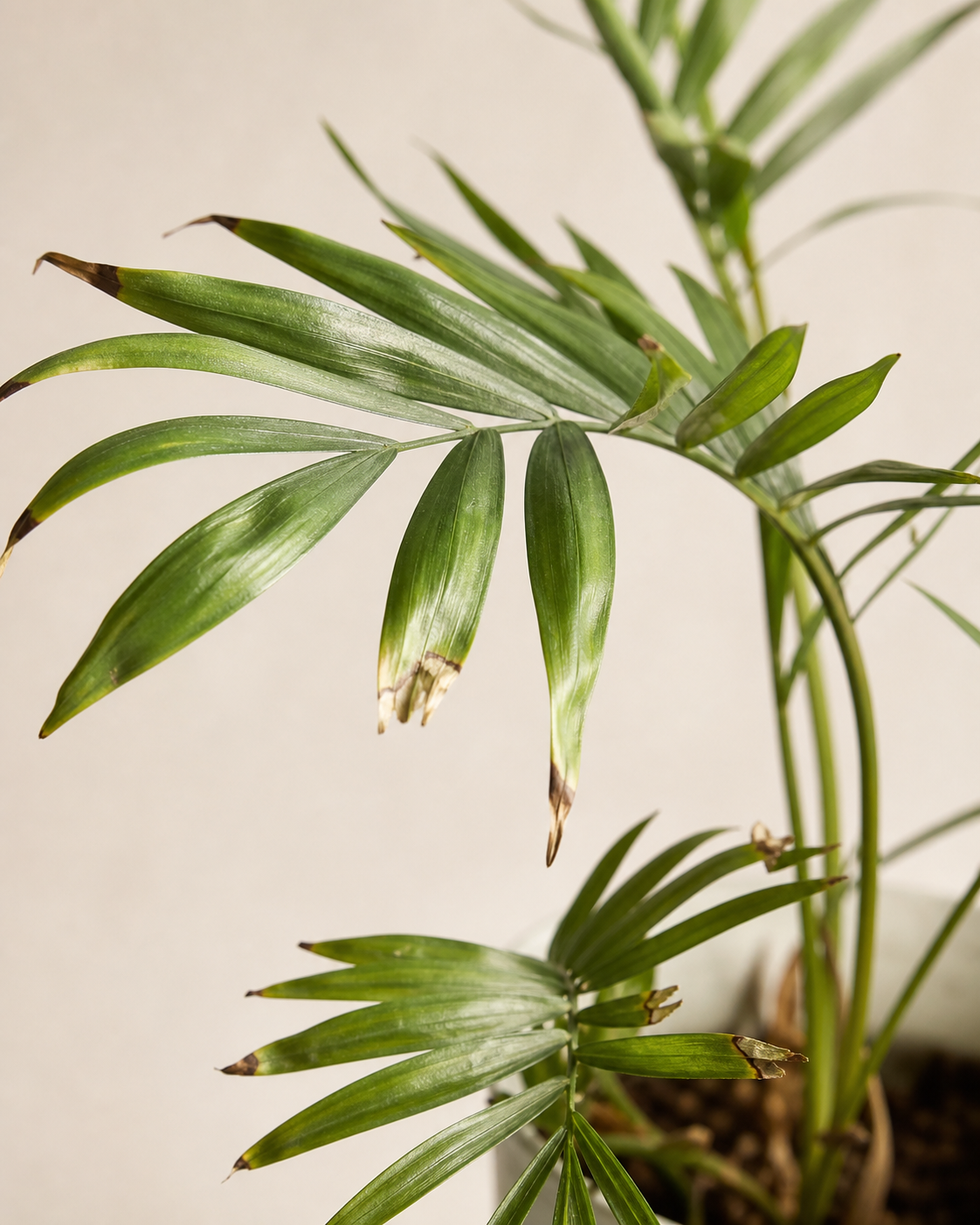
DIAGNOSIS
This Chamaedorea elegans is showing a moderate case of frond drop, a common sign that the plant is under sustained environmental or watering stress. The pattern usually reflects a mismatch between moisture, light, humidity, or temperature stability rather than a single dramatic event.
PLAN FOR THE COMING DAYS
- 01
Check soil moisture and avoid both soggy and bone-dry extremes.
- 02
Move the plant to bright, indirect light.
- 03
Keep it away from drafts, heaters, and sudden temperature swings.
- 04
Trim only fully dead fronds.
- 05
Maintain a steady watering routine with good drainage.
FIELD NOTES
Chamaedorea elegans is often described as an easy indoor palm, but when it begins dropping fronds, it is usually responding to cumulative stress rather than sudden decline. A moderate level of leaf drop means the plant is still recoverable, yet it is clearly signaling that some part of its environment has become unreliable.
Why it happens
Frond drop in Chamaedorea elegans most often appears when the root zone swings between too dry and too wet, or when the plant is asked to adapt to low humidity, dim light, or temperature fluctuations at the same time. This species prefers consistency. If the soil stays soggy, roots can lose oxygen and stop supporting the foliage well. If the mix dries too hard or too often, older fronds may be shed as the plant conserves resources.
Light also matters more than many owners expect. Chamaedorea elegans tolerates lower light than some houseplants, but “tolerates” does not mean “thrives.” In very dim corners, growth slows and older fronds are more likely to yellow, weaken, and fall. Cold drafts, hot dry air from heaters, and abrupt location changes can add another layer of stress that pushes the plant toward leaf loss.
How to recognize it
Moderate drop usually looks like a plant that is losing more fronds than normal aging would explain, but is not yet collapsing across the whole canopy. You may notice a few yellowing or browning fronds first, followed by loosening at the base and eventual drop. The remaining foliage may appear thinner, less upright, or less evenly colored than before.
This matters because natural aging does happen in palms: older lower fronds eventually retire. The warning sign is pace and pattern. If multiple fronds are declining within a short period, or if new growth seems weaker while older foliage sheds, the plant is reacting to care conditions rather than simply maturing.
Recovery plan
Start by restoring steadiness. Review watering first: the soil should not remain waterlogged, but it also should not be allowed to turn bone-dry for long stretches. Check drainage, empty any standing water, and keep the moisture level even. Then assess placement. Bright, indirect light is the safest target for recovery, especially if the plant has been living in a very dark spot.
Humidity and temperature should also be kept gentle and predictable. Keep the plant away from vents, radiators, and drafty windows. Remove fully spent fronds so the plant can redirect energy, but avoid aggressive pruning. Recovery in palms is rarely instant; improvement is usually seen in the stability of new growth rather than the revival of damaged fronds.
Prevention
The best prevention for Chamaedorea elegans is routine. Stable watering, moderate humidity, and a fixed position with soft filtered light usually reduce future frond drop. Rather than chasing fast growth, aim for an environment that changes as little as possible from week to week. For this palm, consistency is often the difference between quiet longevity and repeated stress cycles.
IN THE OWNER'S WORDS
“I thought it was just shedding an old leaf or two, until the whole plant started looking thinner every week.”
COMMON QUESTIONS
0401Why is my Chamaedorea elegans dropping leaves?
Leaf or frond drop usually means the palm is under stress from inconsistent watering, low humidity, poor light, or temperature instability.
02Can Chamaedorea elegans recover after frond drop?
Yes, moderate frond drop is often reversible if conditions are stabilized and the plant is not kept in ongoing stress.
03Is some leaf drop normal for Chamaedorea elegans?
Yes, older lower fronds naturally age out over time. It becomes a problem when several fronds decline quickly or new growth also looks weak.
04Should I cut off yellow fronds on my parlor palm?
Remove fronds only when they are fully spent or mostly dead. Keeping partly green foliage allows the plant to use remaining tissue while it recovers.