Cucumis sativus Leaves Showing Pest Stress in Midseason
Cucumis sativusCucumis sativus
DIAGNOSIS
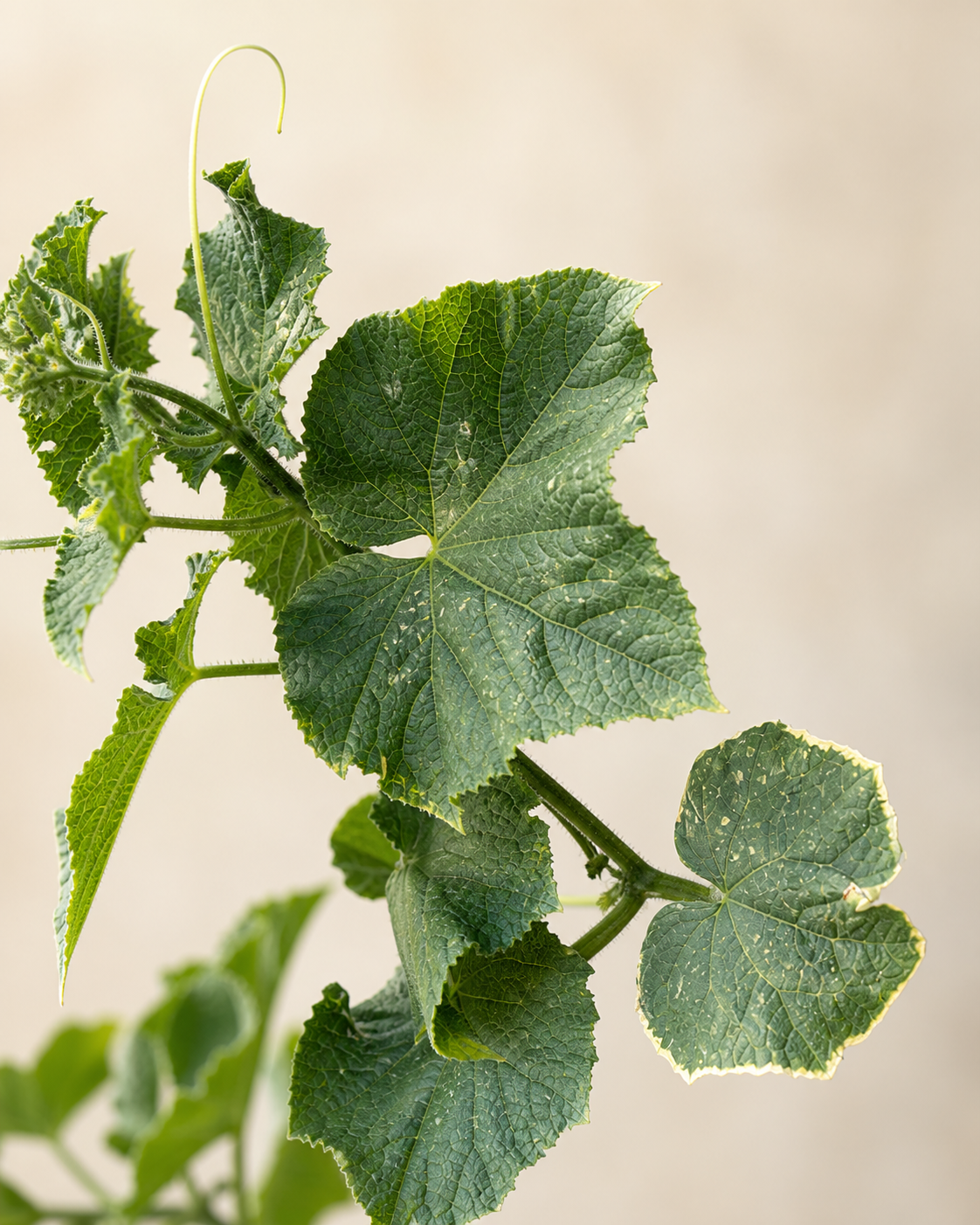
This Cucumis sativus shows a moderate bug-related problem: leaf tissue is being stressed by feeding insects, which disrupt normal photosynthesis and gradually weaken the plant. The issue often builds when tender growth, warm conditions, and limited airflow make the foliage easier for pests to colonize.
PLAN FOR THE COMING DAYS
- 01
Inspect leaf undersides and stem joints closely.
- 02
Remove the most heavily damaged leaves.
- 03
Keep soil moisture even at the root zone.
- 04
Thin or reposition growth to improve airflow.
FIELD NOTES
Cucumis sativus can look vigorous one week and slightly tired the next, especially when insects begin feeding on the leaves. In a moderate case, the plant is not yet in collapse, but it is spending energy replacing damaged tissue instead of directing that energy into steady growth, flowering, and fruit development. That shift is often first noticed as dulled color, scattered stippling, minor distortion, or a general sense that the foliage no longer looks clean and even.
Why it happens
Bug pressure usually increases when soft new growth is abundant and the planting stays warm for long stretches. Insects are drawn to tender tissue because it is easier to pierce and feed on. Once feeding starts, the leaf loses some efficiency: damaged cells do less work, moisture balance can become less stable, and the plant has to redirect resources toward stress response.
Moderate infestations also tend to build quietly. Crowded vines, overlapping leaves, and stagnant air create sheltered zones where pests can remain unnoticed. Even when the insects themselves are hard to see at first glance, their effect shows up in the leaf surface and overall vigor.
How to recognize it
Look for foliage that appears lightly speckled, unevenly faded, nibbled, or slightly curled compared with healthy leaves on the same plant. Newer leaves may show stress first because they are more tender. Turn leaves over and inspect the undersides and the junctions where stems and petioles meet; these are common hiding places for small plant-feeding bugs.
A moderate problem usually means the plant is still functional, but the pattern of injury is spreading rather than staying isolated to one old leaf. If blossoms and new growth are present but seem less robust than before, insect feeding may already be affecting the plant's energy balance.
Recovery plan
Begin with a close inspection of the entire plant, especially the undersides of leaves and the most crowded sections of growth. Remove the most heavily damaged leaves if they are no longer contributing much energy to the plant. Then reduce plant stress: keep watering consistent at the root zone, avoid unnecessary leaf wetting late in the day, and improve airflow around the vines if they are packed too tightly.
Because the care record here does not include a prescribed treatment schedule, the safest immediate approach is observation plus sanitation. Cleaning up damaged foliage and checking plants regularly helps you judge whether the pest pressure is stabilizing or increasing. A moderate bug issue can remain manageable when the plant is kept vigorous and the infestation is caught before large portions of the canopy are affected.
Prevention
Prevention relies on regular inspection more than dramatic intervention. Check leaf undersides often, especially during warm periods of fast growth. Keep the canopy open enough for air to move through it, and avoid letting stressed, aging foliage accumulate around healthy new growth. Healthy cucumbers can tolerate some feeding, but they recover better when pest activity is noticed early and the plant is not also dealing with drought or overcrowding.
IN THE OWNER'S WORDS
“I thought the cucumber was just looking tired, but the leaf damage kept spreading from the newer growth.”
COMMON QUESTIONS
0401What bugs commonly affect Cucumis sativus leaves?
Several small plant-feeding insects can stress cucumber leaves, especially those that pierce or chew tender tissue. The exact insect is not confirmed here, but the damage pattern fits a moderate pest issue.
02Can Cucumis sativus recover from moderate pest damage?
Yes, if most of the canopy is still functioning and the plant receives steady care. Recovery is more likely when damaged leaves are managed early and overall stress is reduced.
03Why do pests show up more in warm, crowded growth?
Warm conditions speed pest activity, and dense foliage creates sheltered, humid pockets where insects are harder to notice. Tender new growth also gives them easier feeding sites.
04Should I remove damaged cucumber leaves?
Remove the leaves that are most heavily damaged and no longer helping the plant much. Keep enough healthy foliage in place so the plant can continue photosynthesizing.