Dracaena fragrans and the Mystery of Falling Leaves
Dracaena fragransDracaena fragrans
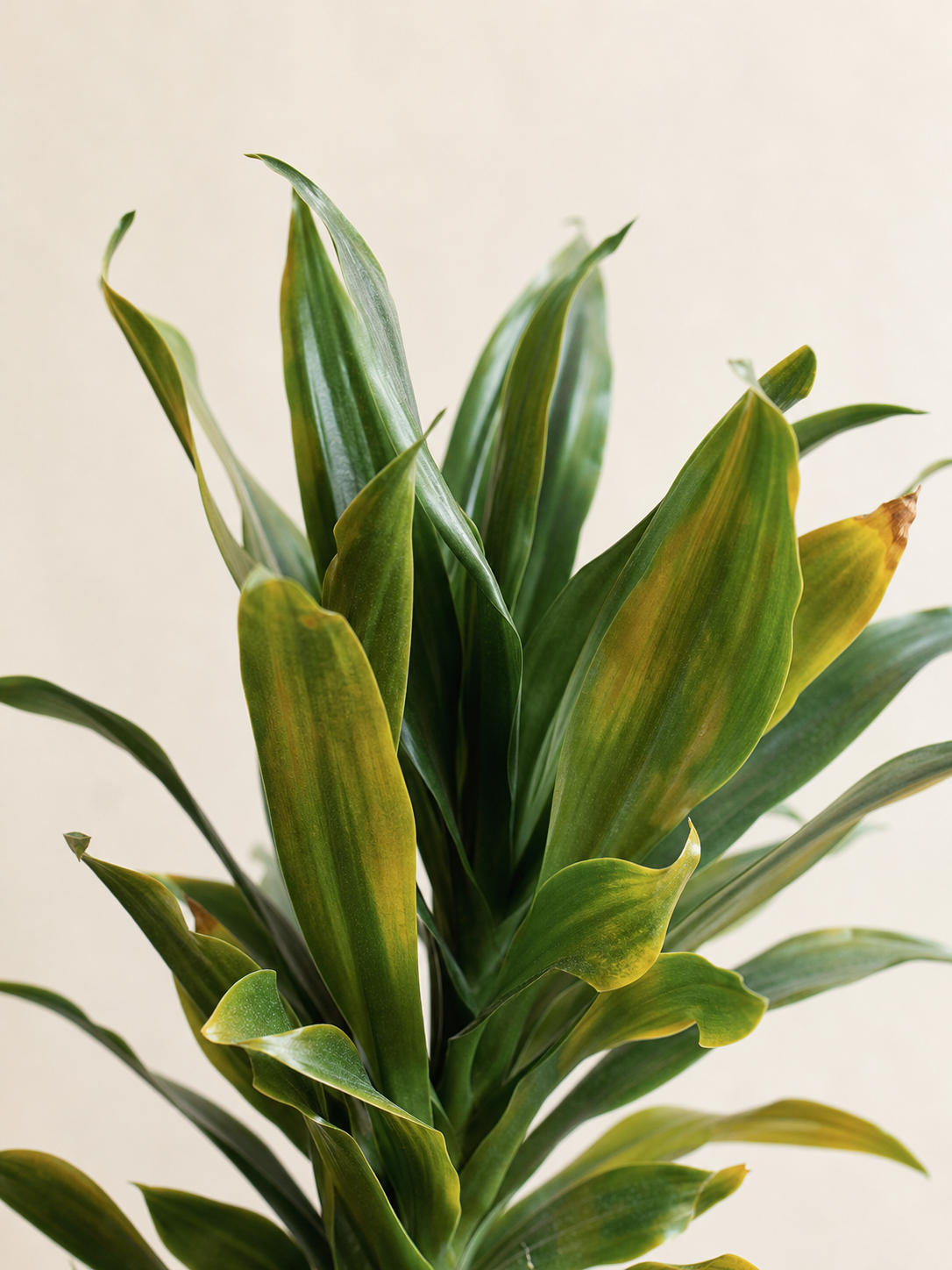
DIAGNOSIS
This Dracaena fragrans is showing moderate leaf drop, a common stress response rather than a single disease in itself. In most cases, the plant is reacting to inconsistent watering, abrupt environmental change, low light, or temperature stress, which disrupts normal leaf retention.
PLAN FOR THE COMING DAYS
- 01
Check soil moisture before every watering.
- 02
Keep watering consistent, avoiding both soggy and bone-dry soil.
- 03
Move the plant to bright, indirect light.
- 04
Protect it from drafts, heaters, and temperature swings.
- 05
Remove only fully yellow leaves.
FIELD NOTES
Dracaena fragrans is often sold as an easy indoor plant, but leaf drop is one of the clearest signs that its conditions have slipped out of balance. Moderate dropping usually means the plant is under sustained stress, not necessarily that it is beyond saving. The key is to read the pattern: are only the oldest lower leaves falling, or is the plant shedding more broadly after a recent change in care or placement?
Why it happens
Leaf drop in Dracaena fragrans is usually tied to the way the plant manages stress. When roots stay too wet for long periods, they cannot function efficiently, and the plant may discard leaves as its internal water balance falters. If the soil becomes too dry between waterings, the same symptom can appear from dehydration. This species also responds noticeably to sudden environmental shifts — moving it to a darker room, placing it near drafts, or exposing it to temperature swings can trigger leaf loss.
Light matters as well. Dracaena fragrans tolerates lower light than many houseplants, but tolerance is not the same as preference. In very dim corners, the plant may gradually weaken and let go of older leaves faster than it can replace them. A recent repot, irregular watering schedule, or seasonal indoor heating can also contribute to moderate shedding.
How to recognize the pattern
Normal aging usually affects only the oldest leaves near the base, one at a time, with the rest of the plant looking stable. Stress-related drop tends to feel different: several leaves yellow, soften, or detach within a shorter period, and the plant may appear less firm or less upright overall. If the soil is repeatedly soggy, roots may be struggling. If it is bone-dry for long stretches, drought stress becomes more likely.
The context is important. A plant that started dropping leaves after being moved, after a missed watering cycle, or after sitting in cold or hot airflow is often telling a straightforward story: conditions changed faster than it could adapt.
Recovery plan
For a moderate case, start by stabilizing care rather than making dramatic changes. Check the soil before watering and aim for a steady rhythm instead of alternating between drought and saturation. Place the plant in bright, indirect light if possible, and keep it away from cold drafts, heaters, and sudden temperature changes.
Remove only leaves that are fully yellow or detached easily. Then give the plant a few weeks of consistency. Dracaena fragrans often recovers well once the root zone and surrounding environment become predictable again.
Prevention
The best prevention is routine. Keep watering even, avoid extreme swings in moisture, and do not treat low light as ideal light. This plant handles ordinary indoor life well when changes are gradual. When the environment stays stable, leaf retention usually improves and new growth has a better chance to balance out older leaves being shed.
IN THE OWNER'S WORDS
“I thought it was random, but the leaf drop started right after I moved my Dracaena fragrans and changed the watering rhythm.”
COMMON QUESTIONS
0501Why is my Dracaena fragrans dropping leaves?
Leaf drop usually points to stress from inconsistent watering, low light, sudden relocation, drafts, or temperature changes rather than a single specific disease.
02Is leaf drop normal for Dracaena fragrans?
Some loss of older lower leaves is normal, but moderate shedding of several leaves over a short period suggests care conditions need adjustment.
03Can overwatering cause Dracaena fragrans leaves to fall?
Yes. When the root zone stays too wet, roots function poorly and the plant may respond by yellowing and dropping leaves.
04Can underwatering cause leaf drop too?
Yes. If the soil stays dry for too long, dehydration stress can also make Dracaena fragrans shed leaves.
05Will Dracaena fragrans recover after leaf drop?
Usually yes, if you stabilize watering, improve light, and protect the plant from environmental stress so it can resume normal growth.