Why Your Dracaena fragrans Is Shedding Healthy-Looking Leaves
Dracaena fragransDracaena fragrans
DIAGNOSIS
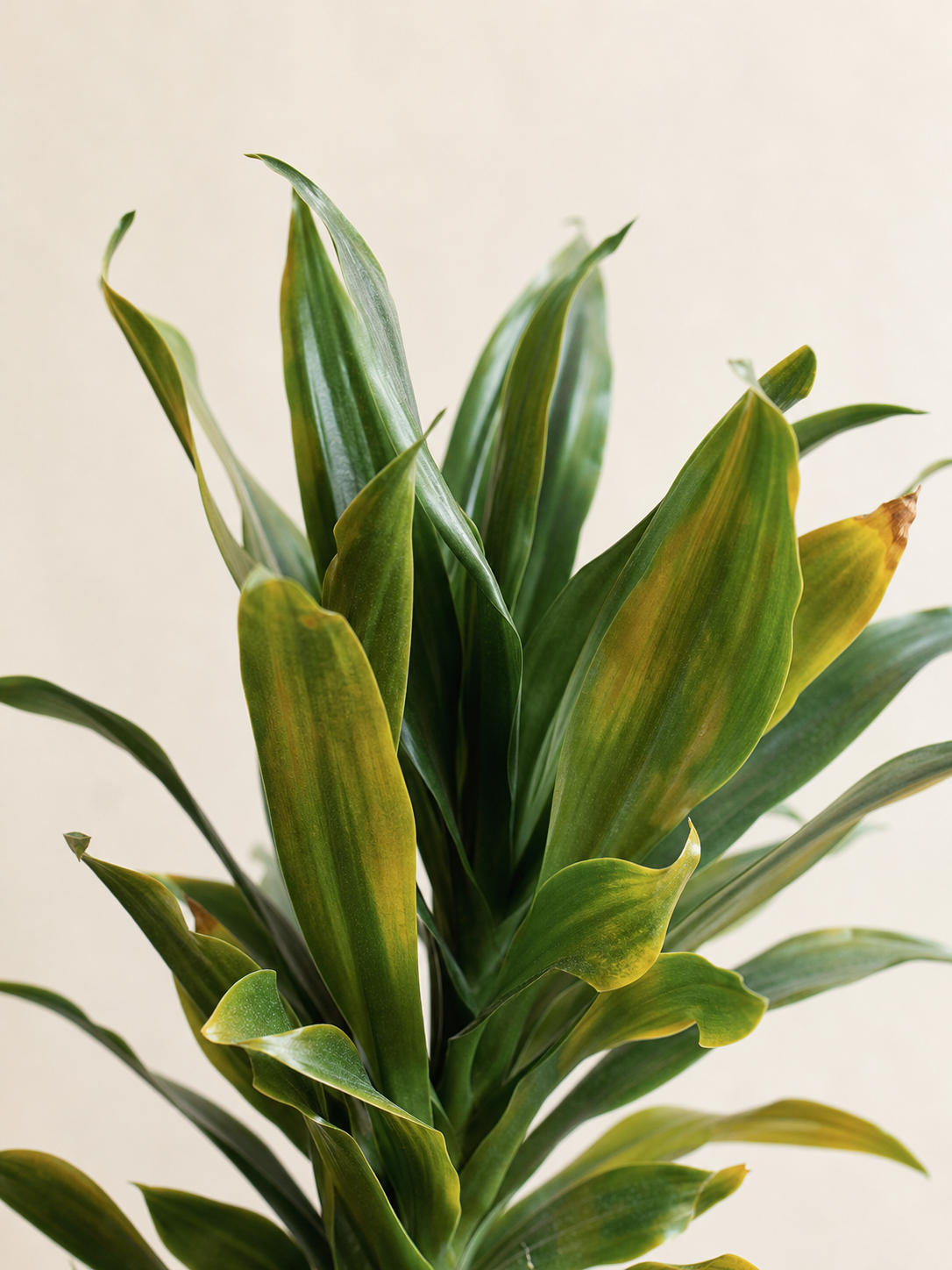
This Dracaena fragrans is showing moderate leaf drop, a common stress response rather than a sign of instant collapse. In most cases, the plant sheds older or weakened leaves when watering, light, or root conditions drift out of balance for long enough.
PLAN FOR THE COMING DAYS
- 01
Let the potting mix dry partly before watering again.
- 02
Move the plant to bright, indirect light.
- 03
Check that excess water drains freely from the pot.
- 04
Rehydrate thoroughly if the soil has become extremely dry.
- 05
Avoid sudden moves, drafts, and uneven indoor conditions.
FIELD NOTES
Dracaena fragrans is often praised as an easy houseplant, but leaf drop is one of the ways it signals that something in its environment has been off for a while. A moderate level of dropping usually means the plant is under manageable stress. The good news is that this symptom is often reversible once the underlying imbalance is corrected.
Why it happens
Leaf drop in Dracaena fragrans is usually tied to a mismatch between water use and growing conditions. If the soil stays wet too long, roots can struggle to breathe and begin to weaken, which reduces the plant’s ability to support its foliage. If the plant stays too dry for repeated stretches, it may also shed leaves to conserve moisture.
Light matters as well. In low light, Dracaena fragrans uses water more slowly and may hold damp soil for too long, which increases root stress. Sudden environmental shifts — such as moving the plant, drafts, or fluctuating indoor conditions — can also trigger a shedding phase, especially in older leaves.
How to recognize it
Moderate leaf drop usually appears as a steady loss of lower or older leaves rather than a dramatic overnight collapse. You may notice leaves yellowing before they fall, or dropping while the cane still looks structurally firm. The symptom becomes more meaningful when paired with clues from the potting mix: soggy soil points toward overwatering and root strain, while bone-dry soil points toward prolonged drought stress.
Check whether the plant is producing healthy new growth at the top. If new leaves still emerge and the stem remains solid, the plant is stressed but often recoverable. If the pot smells sour or the base feels soft, root problems may be becoming more serious.
Recovery plan
Start by reviewing the watering pattern instead of reacting to every fallen leaf. Dracaena fragrans does best when the potting mix is allowed to dry partly between waterings. If the soil is staying wet for many days, reduce frequency and make sure the container drains freely. If the soil has become extremely dry and compacted, rehydrate it thoroughly and resume a steadier routine.
Next, look at light exposure. Bright, indirect light usually helps the plant regulate moisture more predictably than a dim corner. You do not need harsh direct sun, but the plant should not be expected to recover well in deep shade.
Prevention
The most reliable prevention is consistency. Keep watering moderate, provide stable indoor temperatures, and avoid abrupt changes in placement. Leaf drop often slows once Dracaena fragrans is back in a rhythm that matches its growth rate and the season.
IN THE OWNER'S WORDS
“I thought a few fallen leaves meant the plant was done for, but it was really asking for steadier care.”
COMMON QUESTIONS
0401Why is my Dracaena fragrans dropping leaves?
Most often, leaf drop happens when watering, light, or root conditions stay out of balance for too long. Both overly wet soil and repeated dryness can trigger it.
02Can Dracaena fragrans recover after leaf drop?
Yes, if the stem stays firm and the plant still produces new growth, moderate leaf drop is often reversible once care is corrected.
03Does low light cause leaf drop in Dracaena fragrans?
Yes, low light can slow water use, leaving soil wet longer and increasing root stress that may lead to leaf drop.
04Should I water more when leaves are falling?
Not automatically. First check the soil: falling leaves can come from both overwatering and underwatering, so the moisture level matters more than the symptom alone.