Dracaena sanderiana and the Mystery of Falling Leaves
Dracaena sanderianaDracaena sanderiana
DIAGNOSIS
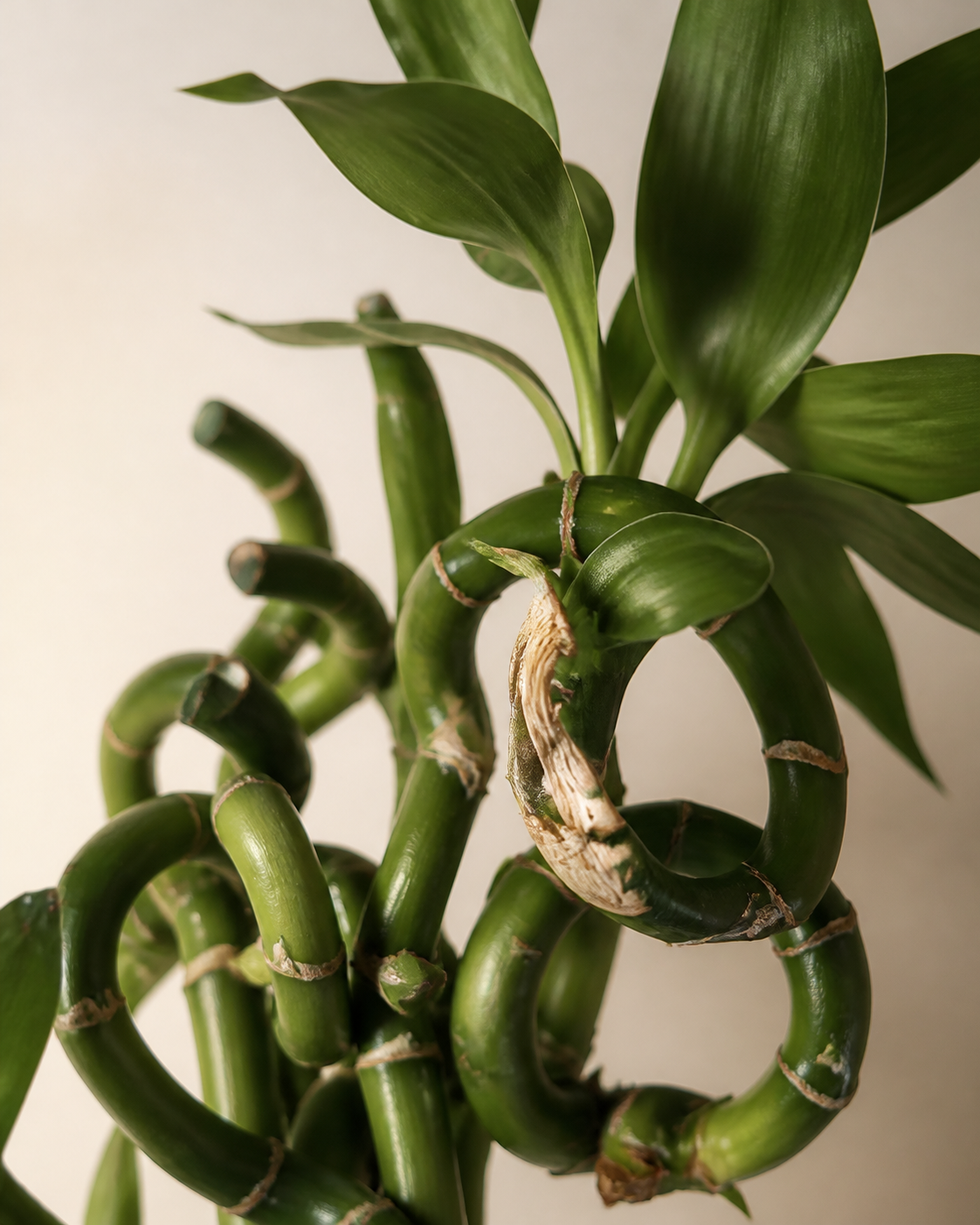
This Dracaena sanderiana is showing a moderate pattern of leaf drop, a common response to environmental stress rather than a disease by itself. In most cases, the plant is shedding foliage because changes in moisture, light, temperature, or water quality have disrupted its normal balance.
PLAN FOR THE COMING DAYS
- 01
Place in bright, indirect light.
- 02
Water only after partial drying of the medium.
- 03
Keep away from drafts, cold windows, and heaters.
- 04
Use filtered or rested water if tap water is harsh.
FIELD NOTES
Dracaena sanderiana is often treated as an easy indoor plant, but leaf drop is its way of signaling that something in the environment has shifted too far. A moderate level of leaf loss usually means the plant is under ongoing stress, not that it has reached a point of collapse. The key is to look for patterns: recent relocation, irregular watering, cold drafts, harsh direct sun, or mineral-heavy water can all contribute.
Why it happens
Leaf drop in Dracaena sanderiana is usually tied to stress in the root-to-leaf system. When roots stay too wet, they struggle to supply oxygen, and the plant may shed leaves because it cannot support all of its foliage efficiently. When the plant becomes too dry, the opposite problem occurs: tissues dehydrate, and older leaves are often sacrificed first.
Light also plays a role. This species prefers bright, filtered light and may react badly to sudden exposure changes. A move from a dim room to direct sun, or from steady light into a darker corner, can trigger a visible shedding cycle. Temperature swings matter as well. Cool air, drafty windows, or placement near heaters can create stress that shows up as leaf drop.
Water quality is another common factor with Dracaena sanderiana. Fluoride, chlorine, and excess salts in tap water may gradually irritate the plant, especially over time. When that stress builds, leaf loss can appear alongside yellowing or browning tips.
How to recognize it
Moderate leaf drop means more than an occasional aging leaf, but less than a dramatic full-plant collapse. You may notice several leaves falling over a short period, often with some yellowing first. If the stem remains firm and the crown still looks active, the plant is stressed but still recoverable.
Check whether the potting medium is consistently soggy, bone dry, or fluctuating between extremes. Look at the plant's location and ask what has changed in the last few weeks. In many cases, the timing of the leaf drop tells the story more clearly than the fallen leaves themselves.
Recovery plan
Recovery depends on restoring stability. Keep the plant in a bright spot with indirect light and avoid abrupt environmental changes. Water only when the growing medium has partially dried, and do not let roots sit in stagnant excess moisture. If your local water is heavily treated or mineral-rich, switching to filtered or rested water may reduce further stress.
Remove only leaves that have fully yellowed or detached easily, and avoid heavy pruning while the plant is trying to rebalance. If the plant was recently repotted or moved, give it time; Dracaena sanderiana often improves once conditions become steady again.
Prevention
The best prevention is consistency. Stable temperatures, moderate moisture, gentle light, and cleaner water help this species hold its foliage. Leaf drop is often the plant's first warning, so small corrections made early usually prevent a more serious decline.
IN THE OWNER'S WORDS
“I thought it was random, but the leaf fall started right after I moved it closer to the window.”
COMMON QUESTIONS
0401Why is my Dracaena sanderiana dropping leaves?
Leaf drop usually reflects environmental stress, especially issues with watering, light changes, temperature swings, or poor water quality.
02Can Dracaena sanderiana recover after leaf drop?
Yes. If the stem stays firm and conditions are stabilized, the plant often recovers and resumes steadier growth.
03Does too much water cause leaf drop in Dracaena sanderiana?
Yes. Constantly wet roots can reduce oxygen availability and trigger leaf drop as the plant becomes stressed.
04Can bad tap water make Dracaena sanderiana lose leaves?
Yes. Fluoride, chlorine, and excess salts may build up over time and contribute to stress-related leaf loss.