Dracaena sanderiana With Troubled Leaves Finds Its Balance
Dracaena sanderianaDracaena sanderiana
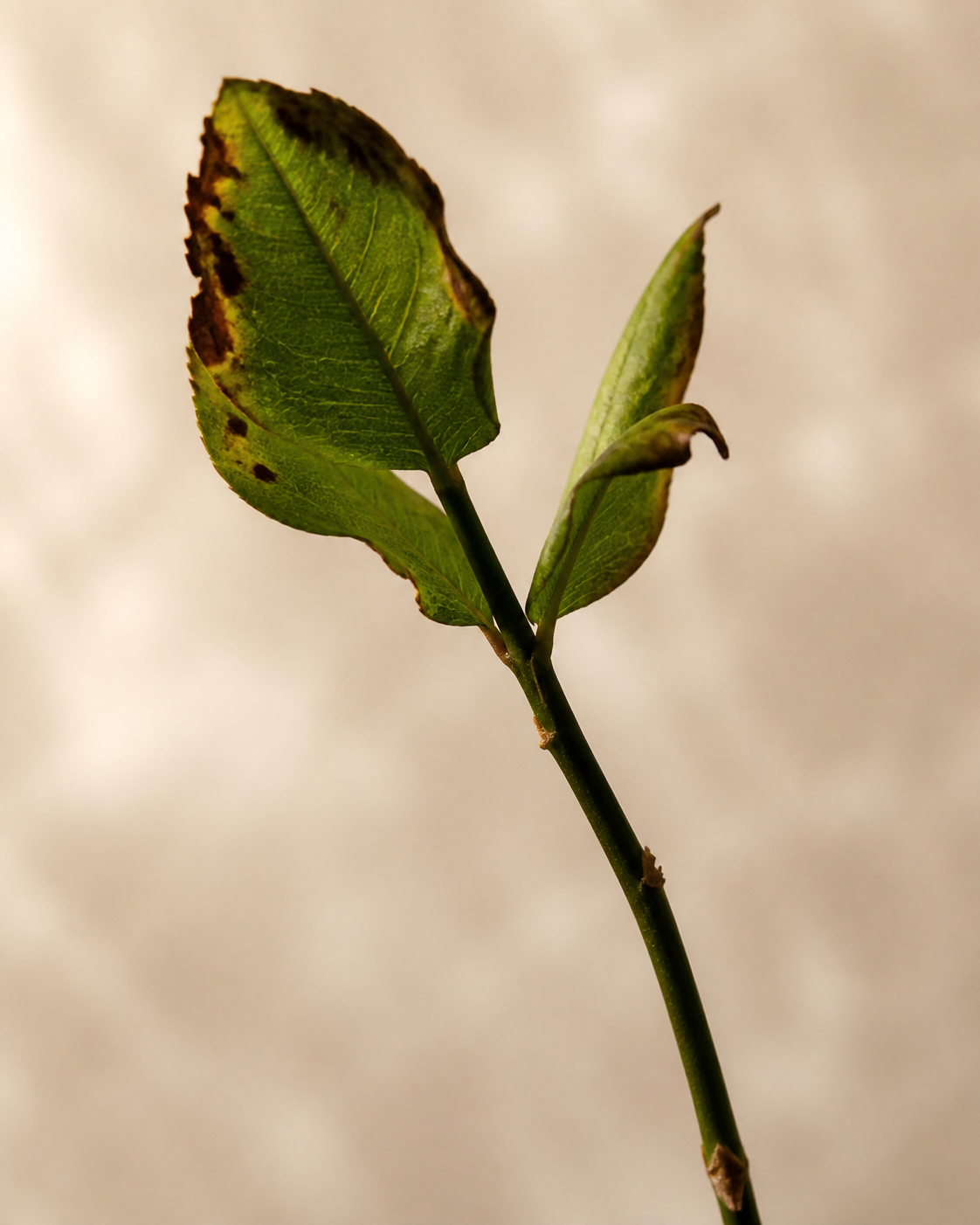
DIAGNOSIS
This Dracaena sanderiana is showing a moderate leaf-level problem, a pattern that usually points to ongoing environmental or care stress rather than a single dramatic event. In this plant, leaf decline commonly develops when light, watering, humidity, or water quality stay slightly out of balance long enough for the foliage to lose resilience.
PLAN FOR THE COMING DAYS
- 01
Move to bright, indirect light.
- 02
Keep watering even and avoid extremes.
- 03
Use cleaner, low-mineral water if possible.
- 04
Raise humidity slightly around the plant.
- 05
Trim only fully damaged leaf tissue.
FIELD NOTES
Why it happens
In *Dracaena sanderiana*, the leaves are often the first place where routine stress becomes visible. This species reacts gradually when its growing conditions drift away from what it can comfortably tolerate. A moderate leaf problem usually means the plant has been coping for a while with one or several small mismatches: inconsistent watering, dim or overly harsh light, dry indoor air, or mineral buildup from poor-quality water.
The botanical logic is straightforward. Leaves are the plant’s working surface for photosynthesis and moisture regulation, so they register imbalance early. When the roots stay too wet, they struggle to function efficiently; when they stay too dry, the foliage loses hydration; when light is off target, the plant cannot maintain strong leaf tissue. Over time, those pressures show up as general leaf decline rather than as a single isolated blemish.
How to recognize it
A moderate leaf issue rarely looks catastrophic at first. Instead, the plant appears less composed than usual: leaves may look tired, uneven, discolored, or less firm. The change often affects the plant’s overall appearance more than one precise spot, which is why this kind of diagnosis points toward care conditions rather than a one-time injury.
Because the input here identifies the problem broadly as a leaf issue, the most useful interpretation is to look at patterns. Has the plant been watered on an irregular schedule? Is it sitting in strong direct sun or in a very dim corner? Has it been exposed to dry air or repeatedly filled with mineral-heavy water? These background details matter because *Dracaena sanderiana* often responds to cumulative stress in its foliage before the stem shows obvious decline.
Recovery plan
Start by simplifying the environment. Place the plant in bright, indirect light and avoid abrupt changes. Review watering habits so the roots are not repeatedly pushed from very dry to very wet conditions. If the air is especially dry, a modest increase in humidity can help reduce further leaf stress.
Water quality also deserves attention. *Dracaena sanderiana* can react to dissolved salts and mineral accumulation, so using cleaner, gentler water may reduce ongoing leaf decline. At the same time, remove only tissue that is clearly spent; healthy green sections still contribute energy while the plant recovers.
Prevention
Prevention is mostly about steadiness. This plant does best when care is predictable: stable indirect light, measured watering, and an environment that does not swing between extremes. Regular observation is more useful than dramatic intervention. When the leaves begin to lose their usual texture or color, that is often the earliest invitation to adjust conditions before moderate stress becomes deeper decline.
IN THE OWNER'S WORDS
“I thought it was one bad week, but the leaves were really telling me the routine had been off for a while.”
COMMON QUESTIONS
0401Why are the leaves on my Dracaena sanderiana declining?
Broad leaf decline in Dracaena sanderiana usually points to cumulative stress from watering imbalance, unsuitable light, dry air, or mineral-heavy water rather than one isolated event.
02Can Dracaena sanderiana recover from moderate leaf damage?
Yes, if the underlying care issues are corrected. Existing damaged areas may not turn green again, but healthier new growth and overall stability are realistic goals.
03What light is best for Dracaena sanderiana with leaf problems?
Bright, indirect light is the safest corrective setting. It supports recovery without adding the stress of harsh direct sun.
04Does water quality affect Dracaena sanderiana leaves?
Yes. This plant can react to dissolved salts and mineral buildup, which may contribute to leaf decline over time.