Dracaena sanderiana With Yellowing Leaves at a Tipping Point
Dracaena sanderianaDracaena sanderiana
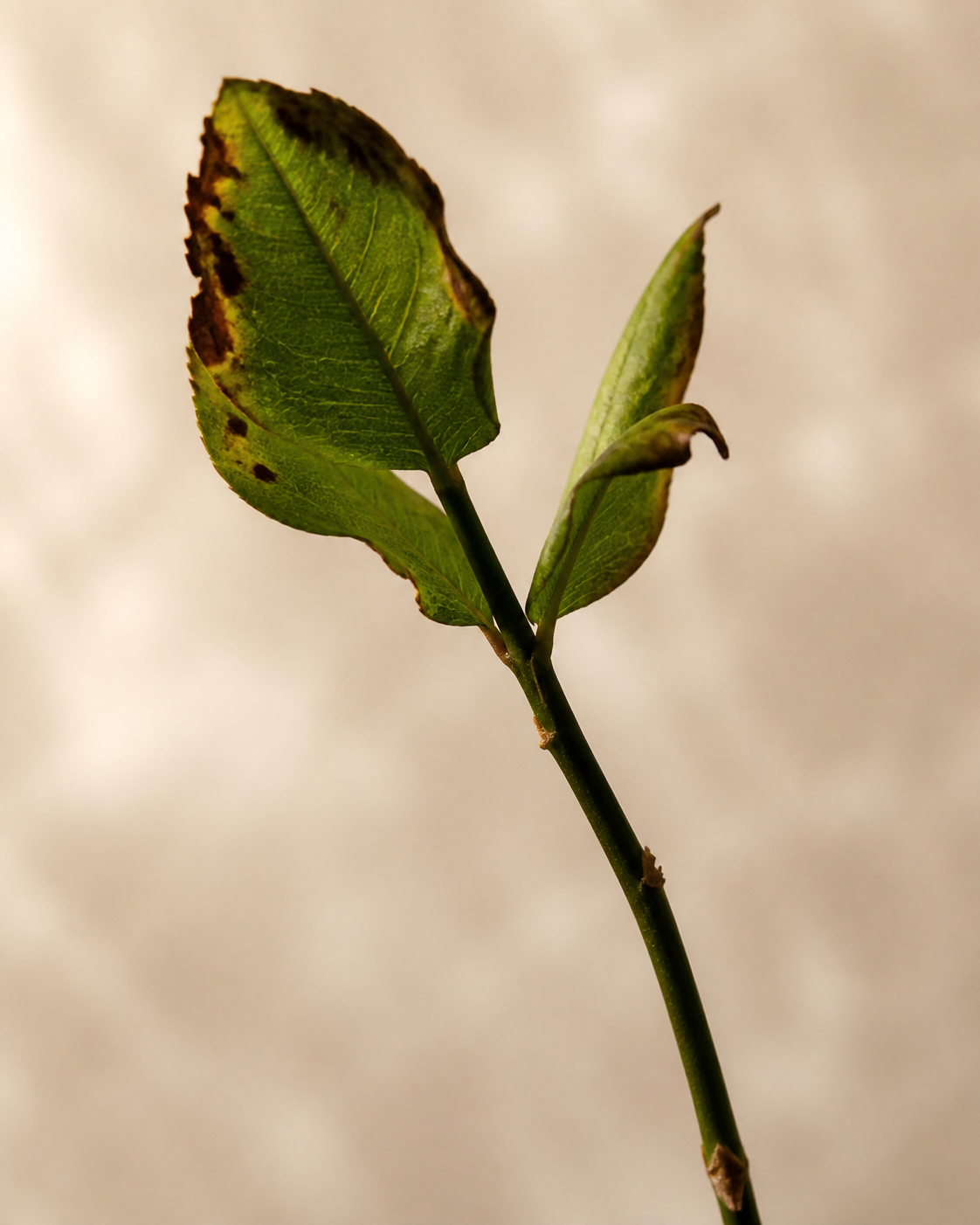
DIAGNOSIS
This Dracaena sanderiana is showing critical leaf decline, with damage severe enough to affect both appearance and basic vigor. In practical terms, the plant is under sustained stress, and the foliage is no longer functioning normally, which points to a breakdown in routine care conditions rather than a cosmetic issue.
PLAN FOR THE COMING DAYS
- 01
Move it to bright, indirect light.
- 02
Keep temperature and moisture conditions stable.
- 03
Trim fully dead leaves with clean scissors.
- 04
Watch new leaves for improved color and firmness.
FIELD NOTES
A once-neat **Dracaena sanderiana** can decline quietly. What begins as a few tired blades often turns into broad yellowing, browning, collapse, or loss of firmness across the foliage. When the problem reaches a **critical leaf stage**, the leaves are no longer just unattractive—they are signaling that the plant has been under pressure long enough to disrupt normal growth.
Why it happens
Leaf problems in **Dracaena sanderiana** usually reflect ongoing stress in the root-to-leaf system. The foliage depends on stable moisture, appropriate light, and reasonably consistent environmental conditions. When that balance is lost, leaf tissue begins to weaken, discolor, dry at the margins, or fail all at once.
In a critical case, the plant is not simply reacting to age or minor cosmetic wear. The botanical issue is that stressed leaves can no longer regulate water properly or support normal metabolism. That is why severe leaf decline often appears as widespread yellowing, dullness, limp growth, or necrotic patches rather than one isolated blemish.
How to recognize it
Look beyond a single damaged leaf. A critical pattern usually means multiple leaves are affected, the discoloration is spreading, and the plant’s overall posture looks weaker than usual. Leaves may yellow from the tip or along the blade, lose their elasticity, or develop dry brown sections that do not recover.
This matters because leaves are the plant’s working surface. Once enough foliage is compromised, the plant has less capacity to maintain itself. The result is a visible slowdown: less firmness, less resilience, and a much narrower margin for error in care.
Recovery plan
Because the care schedule provided here is empty, the safest editorial guidance is to stabilize the environment rather than prescribe a highly specific regimen. Start by removing obvious sources of stress and observing the newest leaves, which are the best indicator of whether conditions are improving.
Place the plant in steady, bright indirect light. Keep conditions even, avoiding abrupt changes in temperature, light exposure, or moisture. If leaves are fully dead or crisp, trim them back with clean tools so the plant can direct energy toward viable growth. Then monitor whether fresh foliage emerges cleaner and firmer than the damaged leaves.
Prevention
The best prevention for future leaf decline is consistency. **Dracaena sanderiana** tolerates gentle indoor life better than neglect followed by sudden correction. Stable light, moderate moisture management, and a calm environment help keep leaf tissue functional and reduce the risk of another critical decline.
If new leaves continue to deteriorate despite improved conditions, treat that as a sign that the underlying stress has not yet been resolved. In leaf disorders, recovery is measured not by old damage disappearing, but by healthier new growth replacing it.
IN THE OWNER'S WORDS
“I thought it was just one old leaf, and then I realized the whole plant was losing strength.”
COMMON QUESTIONS
0401Why are the leaves on my Dracaena sanderiana turning yellow?
Yellow leaves usually indicate sustained stress rather than a purely cosmetic issue. In a critical case, the plant has likely been struggling long enough for leaf function to break down.
02Can damaged Dracaena sanderiana leaves turn green again?
No, badly damaged leaf tissue does not recover its original color or structure. Improvement is judged by healthier new growth, not by old leaves reversing damage.
03Should I cut off brown or dead leaves on Dracaena sanderiana?
Yes, fully dead or crisp leaves can be trimmed with clean tools. This helps tidy the plant and redirects attention to viable growth.
04What light is best for Dracaena sanderiana with leaf problems?
Bright, indirect light is the safest choice during recovery. It supports growth without adding the stress of harsh direct sun.