Ficus lyrata Leaves Losing Color and Balance Indoors
Ficus lyrataFicus lyrata
DIAGNOSIS
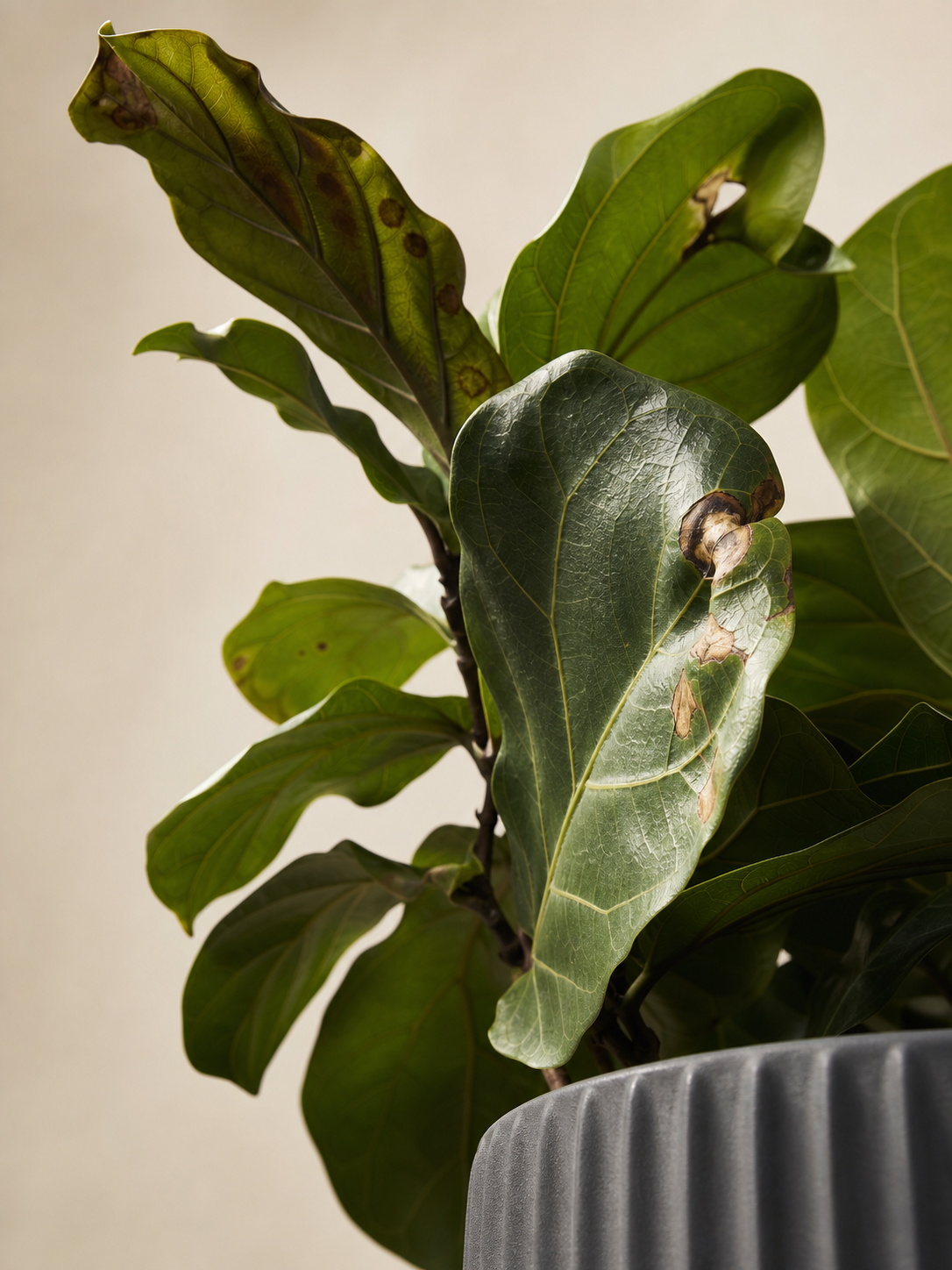
This Ficus lyrata is showing a moderate leaf issue, which usually means the plant is under steady but not yet critical stress. In fiddle-leaf figs, leaf symptoms commonly develop when light, watering rhythm, humidity, or recent environmental changes push the foliage out of balance.
PLAN FOR THE COMING DAYS
- 01
Move it to bright, indirect light.
- 02
Water only after checking soil moisture.
- 03
Keep moisture even, not too wet or too dry.
- 04
Protect it from drafts and heat blasts.
- 05
Avoid repeated repositioning while it recovers.
FIELD NOTES
Ficus lyrata is often judged by its leaves first, so even a moderate change in foliage can feel dramatic. In reality, leaf problems are usually the plant’s way of showing that its growing conditions have drifted away from what it can comfortably manage. When the issue is classified as moderate, the plant is not beyond recovery, but it does need steadier care.
Why it happens
Leaf stress in Ficus lyrata most often begins with imbalance rather than a single catastrophe. This species prefers bright, consistent light and dislikes frequent swings in routine. If watering has been irregular, the roots may alternate between staying too dry and sitting too wet, and the leaves often respond before the whole plant declines. Low humidity, drafts, abrupt relocation, or a sharp change in temperature can also show up first in the foliage.
Because leaves are the plant’s main energy panels, they react quickly when the roots and environment are no longer working together smoothly. Moderate symptoms suggest that the plant is still functioning, but it is spending energy coping with stress instead of growing well.
How to recognize it
A moderate leaf problem does not always look the same from one plant to another. You may notice discoloration, patchiness, curling, dullness, edge damage, or leaves that seem less firm than usual. Sometimes older leaves are affected first; in other cases, the plant reacts more generally after a recent change in placement or care.
What matters most is the pattern. If several leaves are showing visible decline, but the stems remain structurally sound and the plant still has active growth potential, the situation is usually moderate rather than severe. That means observation is important, but panic is not helpful.
Recovery plan
Start by stabilizing the environment instead of making many dramatic corrections at once. Place the plant in bright, indirect light and avoid moving it repeatedly. Check the potting mix before watering so that care follows the plant’s actual moisture level rather than a rigid schedule.
If the soil stays wet for too long, the roots may be under strain; if it becomes bone dry too often, the leaves can lose resilience. Aim for even moisture, not extremes. Keep the plant away from cold drafts, heating blasts, and other abrupt indoor fluctuations. Damaged leaves may not fully repair, but new growth should emerge stronger once conditions are consistent.
Prevention
The best prevention for leaf trouble in Ficus lyrata is consistency. Give it stable light, measured watering, and enough space to adjust slowly to seasonal shifts. Instead of reacting to every imperfect leaf, look at the plant as a whole and track whether the overall pattern is improving.
Moderate leaf stress is often reversible when the plant’s routine becomes predictable again. A calmer environment usually does more good than frequent intervention.
IN THE OWNER'S WORDS
“I thought one odd leaf was random, but then I realized the whole plant had been reacting to my changing routine.”
COMMON QUESTIONS
0401Why are the leaves on my Ficus lyrata looking unhealthy?
Leaf problems in Ficus lyrata usually reflect environmental stress, especially inconsistent watering, unsuitable light, low humidity, drafts, or a recent change in conditions.
02Can damaged Ficus lyrata leaves recover?
Existing damage often remains visible, but the plant can still recover overall. The best sign of improvement is healthier new growth after conditions become stable.
03Is a moderate leaf problem serious for Ficus lyrata?
Moderate means the plant is stressed but not usually in immediate collapse. It needs steadier care soon so the problem does not progress.
04How often should I water a Ficus lyrata with leaf issues?
Do not rely on a fixed calendar alone. Check the potting mix first and water based on actual moisture so the roots are neither staying soggy nor becoming completely dry too often.