Hydrangea macrophylla With Drooping Leaves in Summer Heat
Hydrangea macrophyllaHydrangea macrophylla
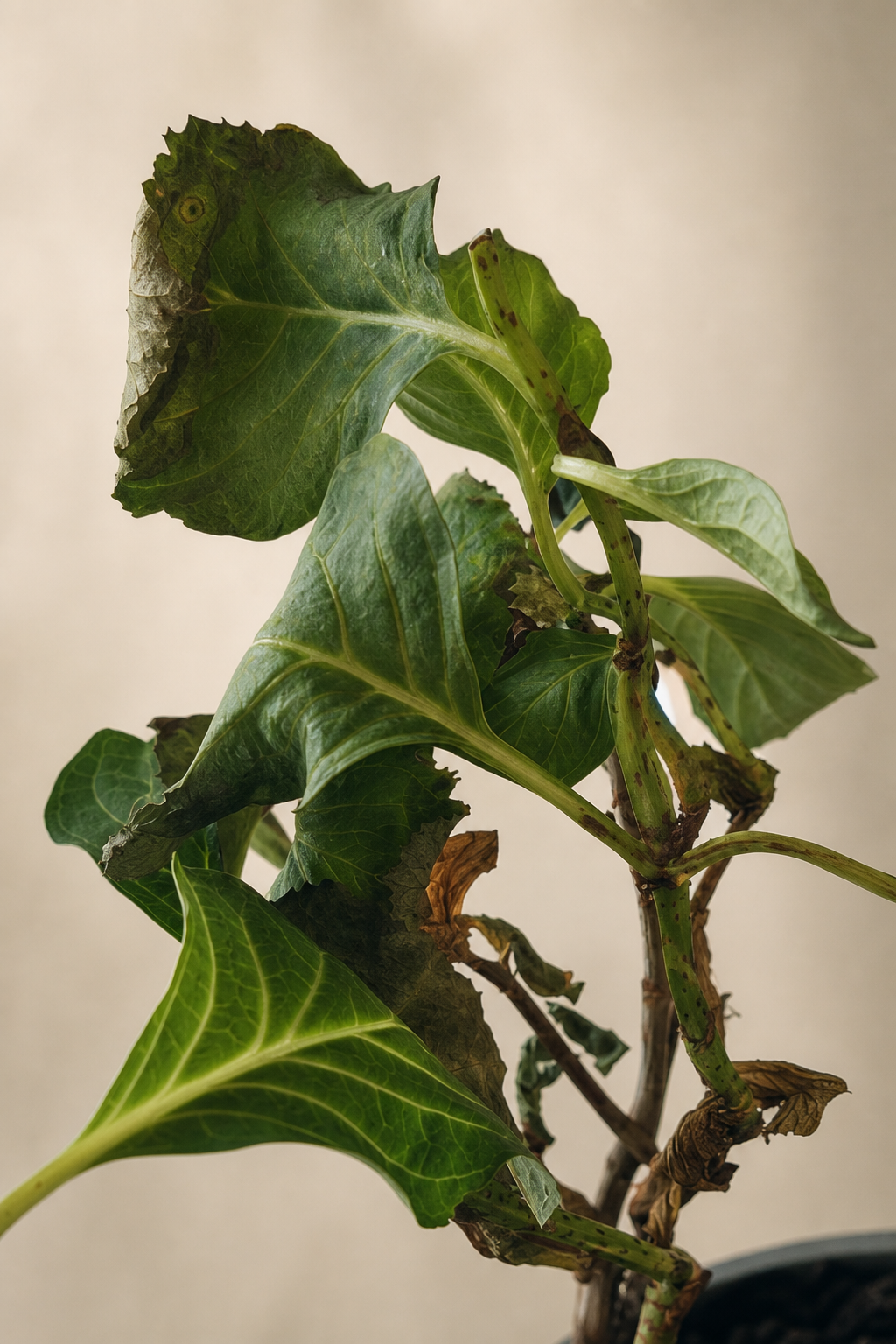
DIAGNOSIS
This Hydrangea macrophylla is showing a moderate drooping pattern consistent with stress rather than a single dramatic collapse. In bigleaf hydrangea, leaf and stem drop usually points to disrupted water balance: the roots cannot supply moisture as quickly as the large leaves lose it, especially during heat, wind, uneven watering, or root disturbance.
PLAN FOR THE COMING DAYS
- 01
Check moisture below the soil surface before watering.
- 02
Keep the root zone evenly moist, never waterlogged.
- 03
Give afternoon shade during hot or windy weather.
- 04
Mulch the soil to slow evaporation around the roots.
- 05
Avoid heavy pruning or extra feeding while leaves are drooping.
FIELD NOTES
Why it happens
Hydrangea macrophylla has broad, moisture-hungry leaves, so it often shows stress early when water movement through the plant slows down. A moderate drooping pattern usually means the tissues are temporarily losing firmness because uptake and loss of moisture are out of sync. This can happen after hot afternoons, drying wind, a missed watering, a pot that dries faster than expected, or roots that are cramped, recently transplanted, or otherwise disturbed.
The key point is that “droop” is a visible symptom, not a complete diagnosis on its own. In bigleaf hydrangea, the most common botanical explanation is reduced turgor pressure in the leaves and soft stems. When the root zone is too dry, too compacted, overheated, or inconsistently moist, the plant cannot maintain that pressure well. The result is a tired, hanging look even when the plant is not beyond recovery.
How to recognize it
Moderate drooping tends to look like leaves that hang downward, soften, or lose their usual outward spread while still retaining much of their color. Stems may bend slightly instead of standing firm, especially by late day. If the plant improves overnight or in cooler morning conditions, that strongly suggests water-balance stress rather than immediate irreversible damage.
Look at the whole context around the plant. Hydrangeas in containers, near reflective walls, in exposed afternoon sun, or in fast-draining soil are especially prone to this pattern. Recently planted specimens may also droop because the roots have not yet fully settled into the surrounding soil. If the wilt is paired with crisp browning, severe yellowing, or mushy crown tissue, the situation may be more complex, but simple droop alone often starts with moisture stress.
Recovery plan
Because the known issue here is drooping and no formal care schedule is provided, the safest approach is supportive, observant care. Check soil moisture below the surface rather than judging only the top layer. Aim for evenly moist soil, not cycles of bone-dry and saturated conditions. If the plant is in a pot, remember that container hydrangeas can need more frequent attention during warm weather.
Temporarily reducing stress helps the plant restore leaf firmness. Afternoon shade, shelter from drying wind, and a mulch layer over the root zone can all slow water loss. Avoid sudden heavy pruning or extra fertilizer while the plant is drooping, since both can add pressure when the roots are already struggling to keep up.
Prevention
The best prevention is consistency. Hydrangea macrophylla performs best when the root zone stays cool, buffered, and evenly moist. A steady routine matters more than dramatic rescue measures. Once the plant regains balance, watch how quickly the soil dries in its exact location and adjust care to the weather rather than the calendar.
Moderate drooping is often reversible when the cause is caught early. The plant is telling you that demand above ground is outpacing supply below ground. Restoring that balance is usually the central task.
IN THE OWNER'S WORDS
“I thought it had suddenly failed, but the pattern made more sense once I noticed it drooped hardest after hot afternoons.”
COMMON QUESTIONS
0401Why is my Hydrangea macrophylla drooping even when the leaves stay green?
Green but drooping leaves often indicate water-balance stress rather than immediate tissue death. The roots may be taking up moisture too slowly for the rate of loss through the large leaves.
02Can heat make bigleaf hydrangea leaves hang down?
Yes. Heat and drying wind can increase water loss so quickly that leaves temporarily lose firmness, especially in containers or exposed sites.
03Should I water a drooping hydrangea every day?
Not automatically. Check moisture below the surface first and aim for even moisture, because both drought and constantly saturated soil can worsen root stress.
04Will a moderately drooping hydrangea recover?
Often yes, if the cause is caught early and the root zone is stabilized. Improvement in cooler morning conditions is a reassuring sign.