Hydrangea macrophylla Leaves Dropping After Heat and Water Stress
Hydrangea macrophyllaHydrangea macrophylla
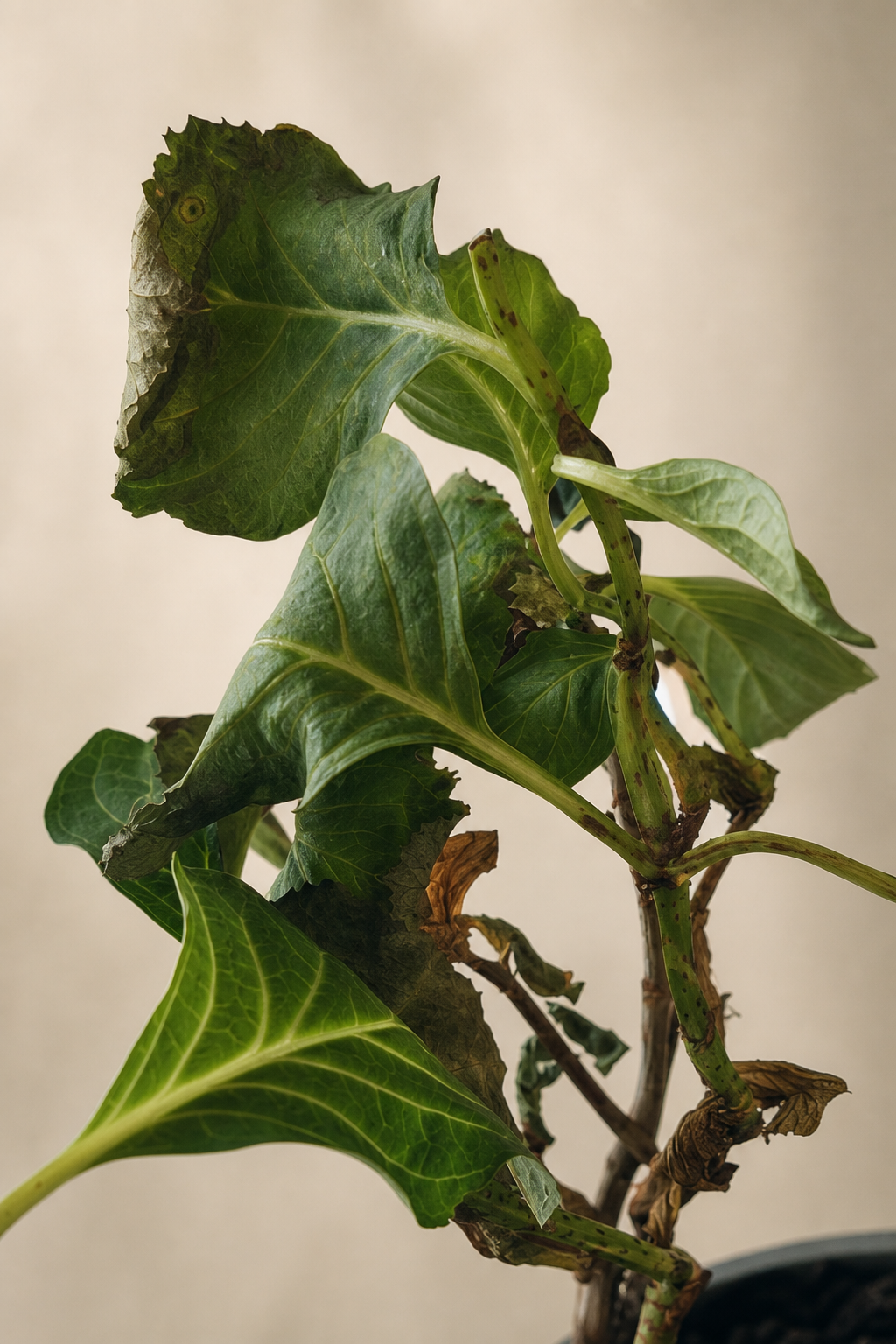
DIAGNOSIS
This Hydrangea macrophylla is showing critical leaf drop, a stress response rather than a cosmetic flaw. In bigleaf hydrangea, sudden shedding usually points to a breakdown in water balance around the roots, often intensified by heat, irregular watering, root disturbance, or drainage problems.
PLAN FOR THE COMING DAYS
- 01
Check soil moisture through the full root zone before watering again.
- 02
Keep the soil evenly moist, never bone-dry or waterlogged.
- 03
Move the plant to bright shade or gentle morning sun.
- 04
Improve drainage and empty any trapped runoff from containers.
FIELD NOTES
Why it happens
Hydrangea macrophylla depends on consistently moist, oxygenated soil to keep its large leaves hydrated. When the root zone swings between drought and saturation, the plant can no longer regulate water pressure in its tissues. Leaves first lose firmness, then yellow or scorch at the edges, and in more severe cases the shrub begins dropping foliage to reduce demand on a struggling root system.
This pattern is especially common in warm weather, after transplanting, or in containers that dry too quickly. It can also happen when soil stays wet for too long: roots deprived of oxygen stop taking up water efficiently, so the top growth behaves as if it were dry. That is why leaf drop in hydrangea often reflects two opposite conditions with the same visible result — roots that are too dry, or roots that are too stressed to function.
How to recognize it
Critical drop usually looks broader than a normal seasonal shed. The plant may lose multiple leaves in a short period, and the remaining foliage can appear limp, thin, curled, or patchily discolored. New growth may stall, flower buds may weaken, and the shrub can look suddenly sparse even if stems are still alive.
Check the context as carefully as the leaves. If the soil is pulling away from the pot edge, turning pale, or drying several centimeters down, underwatering is a strong suspect. If the soil feels heavy, sour, or constantly wet, root stress from poor drainage becomes more likely. Recent repotting, hot afternoon exposure, or a burst of wind can also push an already strained plant into leaf drop.
Recovery plan
Because the problem is critical, the goal is stability, not drastic intervention. Return the plant to an even moisture pattern: the root ball should be moist throughout, never powder-dry and never waterlogged. If the shrub is in a container, make sure excess water can leave freely and do not let the pot stand in trapped runoff.
Place the plant where it gets bright shade or gentle morning light while it recovers. Avoid heavy feeding for the moment; fertilizer can increase root stress when the plant is already struggling to manage water. Remove only leaves that are fully dead, then watch for whether new foliage emerges firm and evenly colored. Recovery is measured less by the fallen leaves than by the steadiness of the next growth cycle.
Prevention
Bigleaf hydrangea does best with predictable care. A mulch layer helps buffer heat and moisture swings in the ground, while container plants benefit from closer monitoring during warm spells. The main preventive principle is simple: protect the roots from extremes. Once the root zone stays cool, airy, and evenly moist, leaf retention improves significantly.
IN THE OWNER'S WORDS
“I thought it just needed more water, but the falling leaves were really telling me the roots were under stress.”
COMMON QUESTIONS
0401Why is my Hydrangea macrophylla dropping leaves suddenly?
Sudden leaf drop usually means the plant is under serious root-zone stress. The most common triggers are inconsistent watering, heat, recent transplant shock, or soil that stays too wet and deprives roots of oxygen.
02Can overwatering cause leaf drop in bigleaf hydrangea?
Yes. When soil remains saturated, roots cannot breathe or absorb water properly, and the shrub may shed leaves even though the pot or bed feels wet.
03Will dropped hydrangea leaves grow back?
The fallen leaves will not reattach, but the plant can produce healthy new growth if the roots recover and moisture becomes stable. Watch the next flush of leaves for firm texture and even color.
04Should I fertilize a hydrangea that is losing leaves?
Not during acute stress. Fertilizer can add pressure to already compromised roots; it is better to restore balanced moisture and drainage first.