Ipomoea batatas Leaves Fading After a Heavy Feeding
Ipomoea batatasIpomoea batatas
DIAGNOSIS
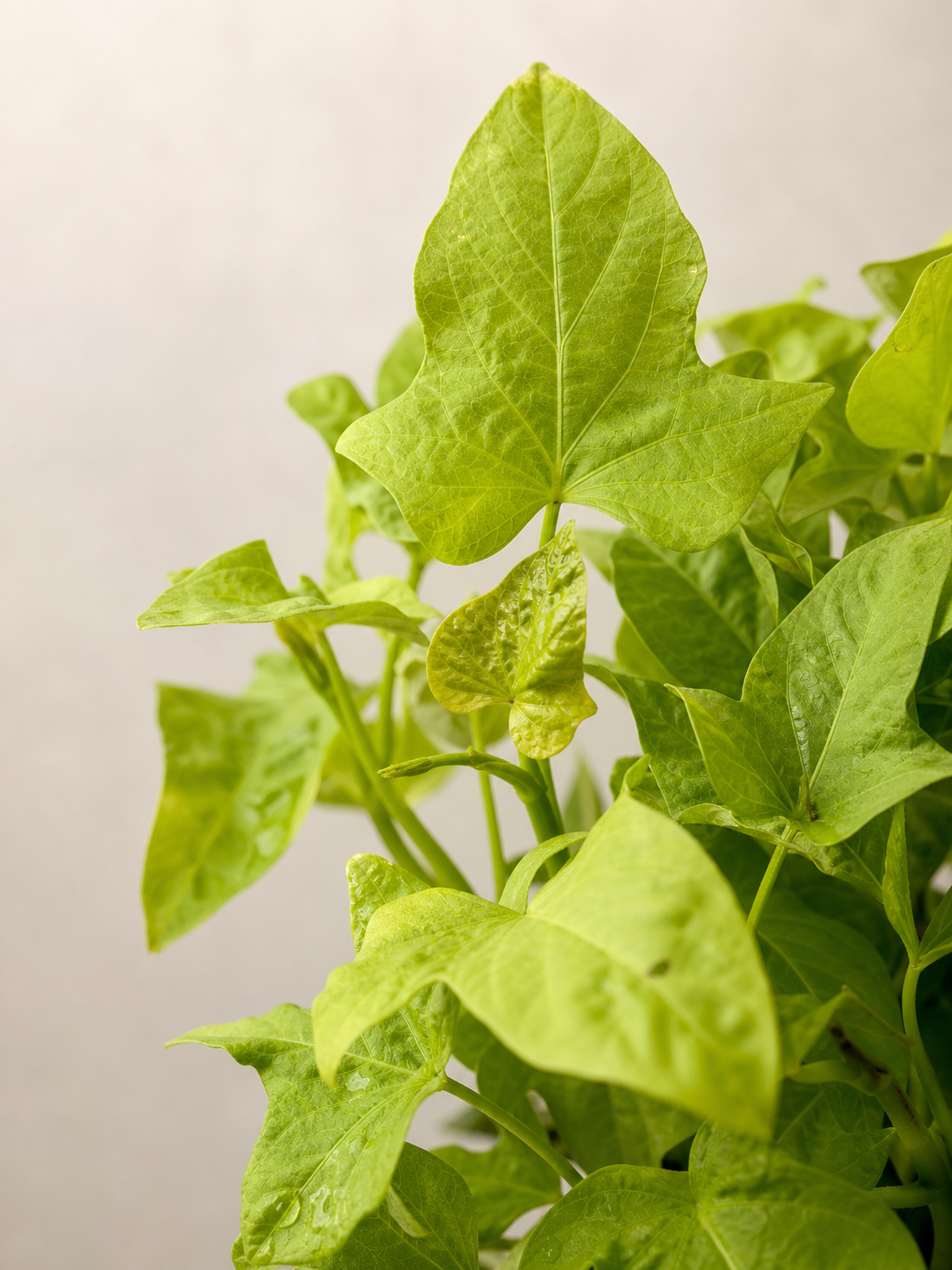
This Ipomoea batatas is showing a moderate fertilizer-related stress pattern. The most likely issue is an imbalance from feeding that is too strong, too frequent, or poorly matched to the plant’s current growth, which can disrupt normal nutrient uptake and leave foliage looking washed out or tired.
PLAN FOR THE COMING DAYS
- 01
Pause fertilizer for now.
- 02
Flush the soil if salts may have built up.
- 03
Keep moisture even and provide good light.
- 04
Resume feeding later at a diluted, balanced rate.
FIELD NOTES
Why it happens
Ipomoea batatas is a vigorous grower, but that does not mean it benefits from constant or heavy feeding. When fertilizer is applied too often, at too high a dose, or without regard to the plant’s current light and watering conditions, the root zone can become chemically imbalanced. In practical terms, that means the roots may struggle to take up water and nutrients evenly, even when food is technically present in the soil.
This kind of stress often shows up as foliage that loses its fresh, saturated color. Leaves may look pale, flat, or slightly dull rather than richly green. Growth can also become uneven: some parts push weak, soft growth while older leaves seem tired. In moderate cases, the plant is not in immediate collapse, but it is signaling that its feeding routine is working against it rather than supporting it.
How to recognize it
Fertilizer stress can be easy to confuse with simple hunger, but the pattern matters. A plant that is genuinely underfed usually improves steadily once nutrients are supplied in a balanced way. A plant that has been overfed or fed inconsistently may show the opposite: fading leaves, stalled growth, or a generally strained appearance despite recent feeding.
With Ipomoea batatas, look for a mismatch between care and appearance. If the plant has been fertilized recently yet the leaves still seem washed out, the issue may not be a lack of food at all. It may be that excess salts or an unbalanced nutrient profile are interfering with uptake. That is why adding more fertilizer right away often makes the situation harder, not better.
Recovery plan
The first goal is to reduce stress around the roots. Pause fertilizing and let the plant settle into a simpler routine with stable moisture and good light. If the potting mix has likely accumulated excess fertilizer residue, flushing the soil thoroughly can help move surplus salts out of the root zone. After that, allow the soil to drain properly and avoid returning to a heavy feeding schedule too soon.
Once the plant resumes steadier growth, feeding can restart at a gentler rate. For Ipomoea batatas, moderation is usually more effective than intensity. A diluted, balanced fertilizer used less often is easier for the plant to process than repeated strong doses. Watch the new leaves more than the old ones: recovery is usually judged by healthier fresh growth, not by expecting every faded leaf to turn fully green again.
Prevention
Fertilizer works best when it matches the season, the light level, and the plant’s actual pace of growth. During active growth, regular but restrained feeding is usually enough. In lower light or slower periods, the same formula used too often can quickly become stressful.
For future care, keep the routine simple: feed lightly, space applications out, and avoid trying to force lush growth. Ipomoea batatas responds better to consistency than excess. When nutrition is balanced, the foliage typically regains a more even color and the plant returns to its naturally energetic habit.
IN THE OWNER'S WORDS
“I thought more fertilizer would wake it up, but the leaves only looked paler each week.”
COMMON QUESTIONS
0401Can too much fertilizer make Ipomoea batatas leaves pale?
Yes. Excess or overly frequent feeding can disrupt nutrient uptake at the roots, and the leaves may start to look faded or dull instead of richly colored.
02Should I add more fertilizer if my Ipomoea batatas looks washed out?
Not immediately. If the plant was fed recently, adding more can worsen the imbalance. It is usually better to pause feeding and reassess the root zone first.
03How do I help a sweet potato vine recover from fertilizer stress?
Stop fertilizing for a time, keep moisture stable, provide good light, and flush the soil if fertilizer residue may have built up. Resume feeding only after steadier new growth appears.
04Will pale leaves turn green again after fertilizer stress?
Older damaged leaves may not fully recover. The best sign of progress is healthier new growth with more even color.