Ipomoea batatas Leaves Fading After a Heavy Feed
Ipomoea batatasIpomoea batatas
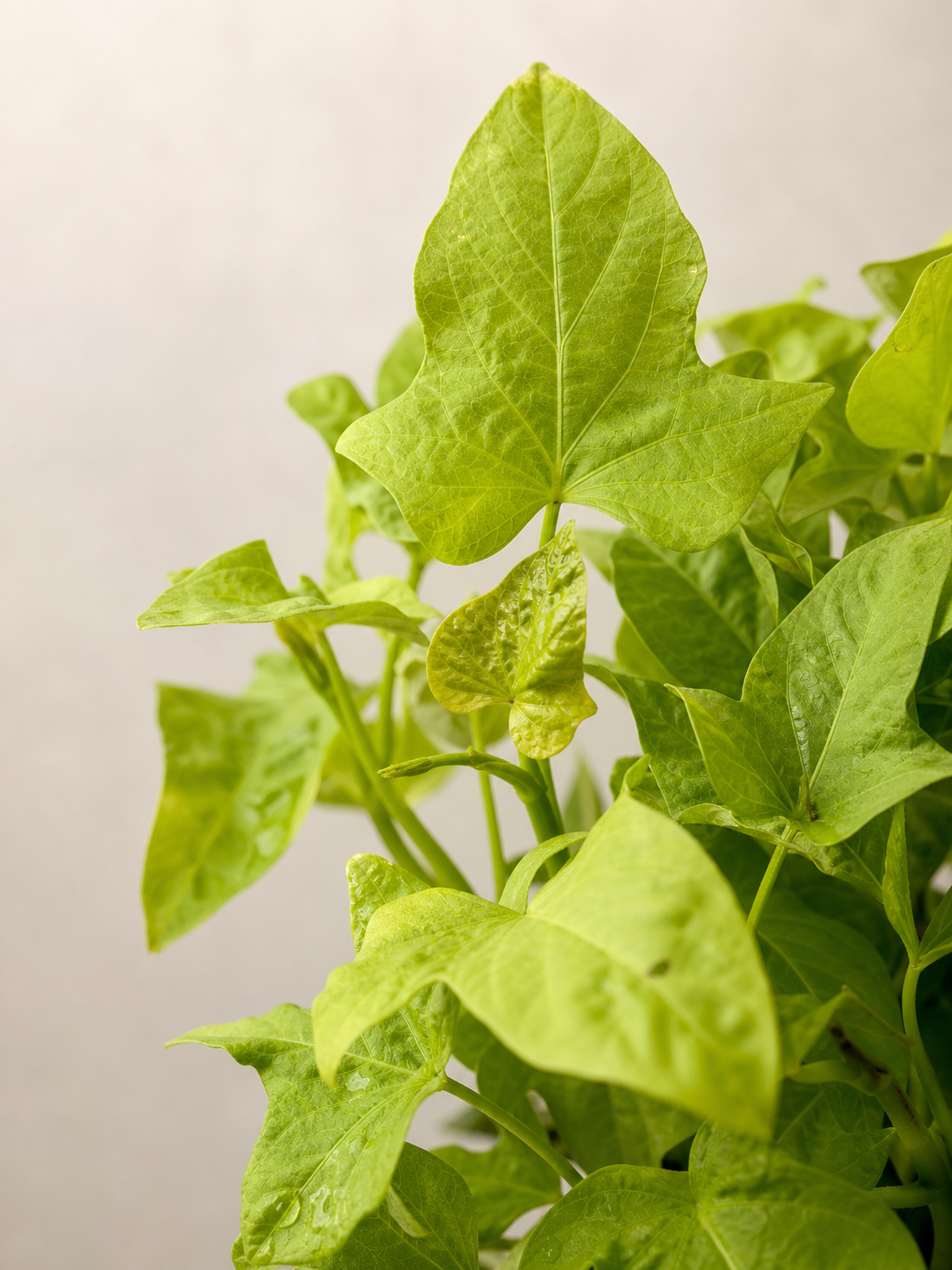
DIAGNOSIS
This Ipomoea batatas is showing a moderate fertilizer-related stress pattern rather than a disease outbreak. The most likely issue is an imbalanced or excessive feeding routine, which disrupts normal nutrient uptake and leaves the plant with faded foliage and uneven vigor.
PLAN FOR THE COMING DAYS
- 01
Stop fertilizing for now.
- 02
Flush the soil with plain water if drainage is good.
- 03
Remove any fertilizer residue from saucers or cachepots.
- 04
Resume with a diluted balanced feed only after healthy new growth appears.
FIELD NOTES
Why it happens
Ipomoea batatas responds quickly to feeding, but that sensitivity can become a problem when fertilizer is applied too often, too strongly, or in the wrong balance. Instead of helping steady growth, excess salts in the soil can interfere with water movement around the roots and make nutrient uptake less efficient. In practice, the plant may look undernourished even when it has technically been fed.
A second pattern is imbalance rather than sheer excess. A fertilizer that pushes one nutrient heavily can limit how well the plant uses others. That creates a muddled picture: leaves may lose depth of color, growth may become irregular, and the plant can seem stalled despite recent care.
How to recognize it
A moderate fertilizer issue usually looks gradual rather than dramatic. On Ipomoea batatas, the foliage often appears washed out or less vibrant than usual, and the plant may stop growing as evenly as it normally would. Some leaves can look tired while others remain usable, which often confuses growers into adding still more fertilizer.
The important editorial distinction is that this pattern points to stress, not a contagious problem. When symptoms are tied to feeding, the plant’s decline often follows a recent change in fertilizer frequency, concentration, or product type. Looking back at that timeline usually explains more than looking for pests or spotting.
Recovery plan
Because the issue is moderate, the goal is to reduce stress and restore a more stable root environment. Pause feeding first. That gives the root zone time to settle and helps prevent additional salt buildup.
If the soil has been fertilized heavily, flushing with plain water can help dilute excess residues, provided the container or planting area drains well. After that, resume only a light, balanced feeding program once the plant shows steadier color and more consistent new growth. Recovery is usually measured in the appearance of new leaves rather than in the damaged foliage fully returning to normal.
Prevention
For Ipomoea batatas, consistency matters more than intensity. A diluted, balanced fertilizer used on a measured schedule is safer than irregular heavy applications. It also helps to avoid stacking products close together, since multiple mild inputs can still create an excessive total load in the root zone.
When in doubt, feed less and observe new growth. The plant usually gives clearer signals after a short reset than it does during repeated corrections. That slower approach prevents a moderate fertilizer problem from turning into a more serious setback.
IN THE OWNER'S WORDS
“I thought the pale leaves meant it needed more food, but backing off made the new growth look steadier.”
COMMON QUESTIONS
0401Can too much fertilizer make Ipomoea batatas look pale?
Yes. Excess or imbalanced fertilizer can disrupt nutrient uptake, so the leaves may look faded even though the plant has been fed.
02Should I fertilize again if growth looks weak?
Not immediately. If fertilizer stress is the cause, adding more can worsen the problem. Pause feeding first and watch the new growth.
03Will damaged leaves turn green again?
Often the clearest improvement shows in new leaves rather than in older foliage fully recovering.
04How do I correct fertilizer buildup in the soil?
If drainage is good, flushing the soil with plain water can help dilute excess salts before you restart a lighter feeding routine.