Nepenthes rajah in Superb Form, Calm and Vigorously Growing
Nepenthes rajahNepenthes rajah
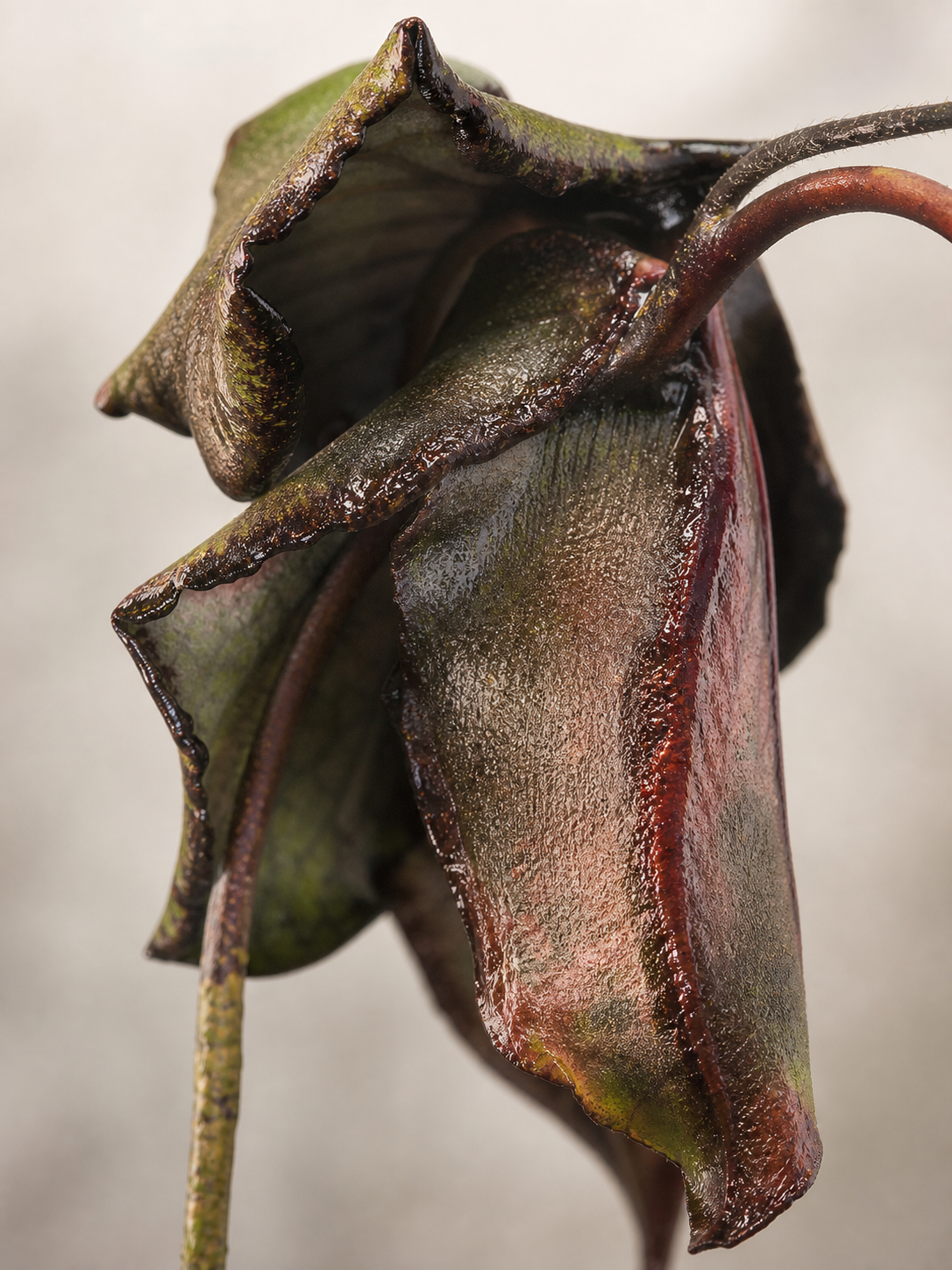
Why this plant is healthy
Why this Nepenthes rajah is thriving
Nepenthes rajah responds best when its core conditions stay steady, and that consistency is the real story behind a healthy specimen. Bright but filtered light helps the plant maintain strong growth without pushing it out of balance. Moisture is also being handled well: the root zone is staying evenly damp rather than swinging between dry and saturated, which is especially important for a highland pitcher plant that prefers dependable hydration.
Just as important is the substrate. Nepenthes rajah grows well in a loose, airy, nutrient-poor mix that allows oxygen around the roots while still holding enough moisture. In a thriving plant, the medium supports the root system without becoming compacted or stagnant. Add stable humidity and good air movement, and the result is a plant that can focus its energy on steady leaf and pitcher production.
How to recognize a healthy plant
A healthy Nepenthes rajah looks composed rather than dramatic. Growth appears steady, leaves develop with good form, and the plant holds itself with a firm, balanced posture. Pitcher development is a useful sign of overall comfort, especially when the plant is receiving enough humidity and light to support normal growth patterns.
Color can vary somewhat with conditions, but the key point is consistency: the plant should look settled in its environment, not constantly reacting to fluctuations. Healthy growth in Nepenthes is often less about speed and more about rhythm. When the plant receives the same supportive conditions week after week, that rhythm becomes visible in its foliage and new development.
Ongoing care plan
The goal now is not to change course, but to protect what is already working. Keep light bright and indirect or gently filtered. Use pure or low-mineral water so the substrate remains suitable for a species adapted to lean conditions. Maintain humidity and avoid abrupt environmental swings, since Nepenthes rajah tends to reward stability more than constant adjustment.
Check the potting mix periodically to make sure it remains open and breathable. If the medium begins to break down, refreshing it at the right time will help preserve root comfort and long-term vigor. Good airflow also matters: humid air should still feel fresh, which helps the plant remain comfortable in an enclosed or semi-controlled growing space.
Keeping that momentum
With Nepenthes rajah, thriving health usually comes from restraint and consistency. Rather than adding unnecessary inputs, continue supporting the plant with the same reliable routine: appropriate light, steady moisture, clean water, airy substrate, and a humid environment with circulation. When those fundamentals remain in place, this species can continue to grow with the quiet confidence that marks a well-kept carnivorous plant.
PLAN FOR THE COMING DAYS
- 01
Keep light bright and filtered.
- 02
Use pure, low-mineral water.
- 03
Maintain even moisture in the substrate.
- 04
Preserve high humidity with gentle airflow.
- 05
Refresh the airy substrate when it breaks down.
IN THE OWNER'S WORDS
“I haven’t had to chase results with this Nepenthes rajah; it simply responds well when the conditions stay calm and consistent.”
COMMON QUESTIONS
0501What conditions help Nepenthes rajah stay healthy?
It does best with bright filtered light, consistently moist but airy substrate, pure water, high humidity, and stable conditions.
02How often should I water a healthy Nepenthes rajah?
Watering depends on the growing environment, but the goal is steady moisture without letting the substrate become dry or stagnant.
03What kind of substrate is best for Nepenthes rajah?
A loose, airy, low-nutrient mix works best because it supports root aeration while retaining enough moisture.
04Does Nepenthes rajah need direct sun?
It generally prefers bright, indirect or gently filtered light rather than harsh direct exposure.
05Why is humidity important for Nepenthes rajah?
Humidity supports normal pitcher development and helps the plant maintain the steady growth pattern typical of a comfortable specimen.