Phalaenopsis aphrodite With Drooping, Stressed Orchid Leaves Today
Phalaenopsis aphroditePhalaenopsis aphrodite
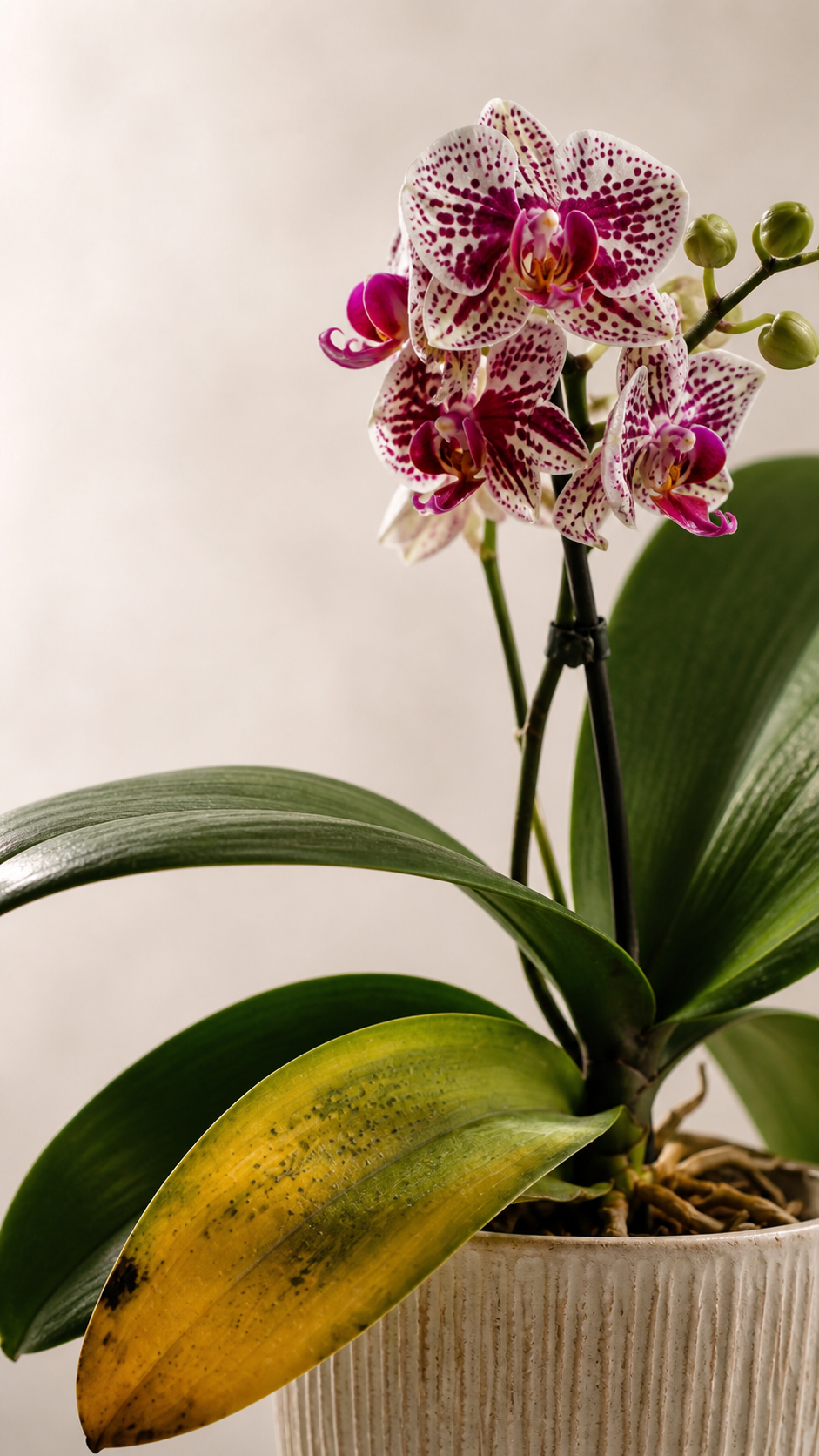
DIAGNOSIS
This Phalaenopsis aphrodite is showing a moderate leaf issue: the foliage is under stress, but the plant is not beyond recovery. In orchids like this, leaf decline usually reflects a mismatch in routine care—most often watering, light, root function, or ambient conditions—rather than a sudden isolated event.
PLAN FOR THE COMING DAYS
- 01
Check roots and potting mix for prolonged wetness or repeated dryness.
- 02
Move the orchid to bright, filtered light.
- 03
Keep temperature and airflow steady; avoid drafts and heat blasts.
- 04
Adjust watering to a consistent rhythm without extremes.
FIELD NOTES
Why it happens
In **Phalaenopsis aphrodite**, leaves are the clearest place where routine-care stress shows up. When a leaf begins to lose firmness, look dull, or seem generally strained, the plant is often reacting to conditions that have been slightly off for a while rather than to a single dramatic mistake. Moderate leaf problems commonly point to an imbalance between moisture uptake and moisture loss.
For this orchid, that imbalance is often tied to watering patterns, root stress, unsuitable light, or changes in temperature and air movement. If roots stay too wet for too long, they may stop functioning well, and the leaves can no longer remain properly hydrated even though the pot seems moist. If the plant stays too dry for repeated cycles, the leaves may also lose tension and resilience. Light that is too harsh can add strain, while light that is too weak can slow the plant’s ability to maintain steady growth.
How to recognize it
A moderate leaf issue means the plant is clearly signaling discomfort, but has not yet reached a severe decline. You may notice leaves that appear softer than usual, less upright, slightly drooping, or generally tired-looking. The change may affect the overall posture of the plant more than any one dramatic lesion.
This kind of presentation matters because orchid leaves act like a running record of root and environmental health. When several care factors drift at once—watering, light, airflow, temperature—the leaves often become the first visible indicator. The key editorial lesson here is that leaf symptoms are usually secondary: they tell you something about how the plant is functioning below the surface.
Recovery plan
Because the issue is moderate, the goal is stability, not overcorrection. Start by reviewing the root zone and recent care rhythm. A plant with stressed leaves benefits most from a calmer, more consistent routine rather than drastic changes from day to day.
Check whether the potting medium is staying wet too long or drying too fast. Reassess light placement so the plant receives bright but filtered light, without prolonged harsh exposure. Keep temperatures steady and avoid placing the orchid where drafts or heat blasts repeatedly disturb it. If the roots have been compromised, leaf recovery may lag behind improvements in care, so patience is part of treatment.
Prevention
Healthy **Phalaenopsis aphrodite** leaves depend on predictable conditions. Water thoroughly, but only when the root environment is approaching the right level of dryness for the medium in use. Maintain airflow without turning the plant into a target for constant drying wind. Give the orchid enough light to support growth, but not enough to scorch or overheat the foliage.
Most importantly, avoid the cycle of neglect followed by heavy compensation. Orchids respond best when care is even, observant, and modest. Moderate leaf stress is often the plant’s way of asking for consistency.
IN THE OWNER'S WORDS
“I thought the leaves were just getting older, but they were really showing me that my routine had become uneven.”
COMMON QUESTIONS
0401Why are my Phalaenopsis aphrodite leaves drooping?
Drooping leaves often indicate stress related to watering patterns, root function, light, or surrounding conditions. In a moderate case, the plant is uncomfortable but may recover well once care becomes steadier.
02Can orchid leaves recover their firmness?
They can improve if the underlying cause is corrected, especially when the issue is moderate. Recovery in the leaves may be slower than recovery in the roots or overall plant stability.
03Does wet potting mix always mean the orchid is hydrated?
No. If roots have been stressed by staying too wet, they may function poorly, and the leaves can still show dehydration-like symptoms.
04Is this a light problem or a watering problem?
It can be either, and often it is a combination. Moderate leaf stress in Phalaenopsis aphrodite commonly reflects several care factors drifting out of balance at the same time.