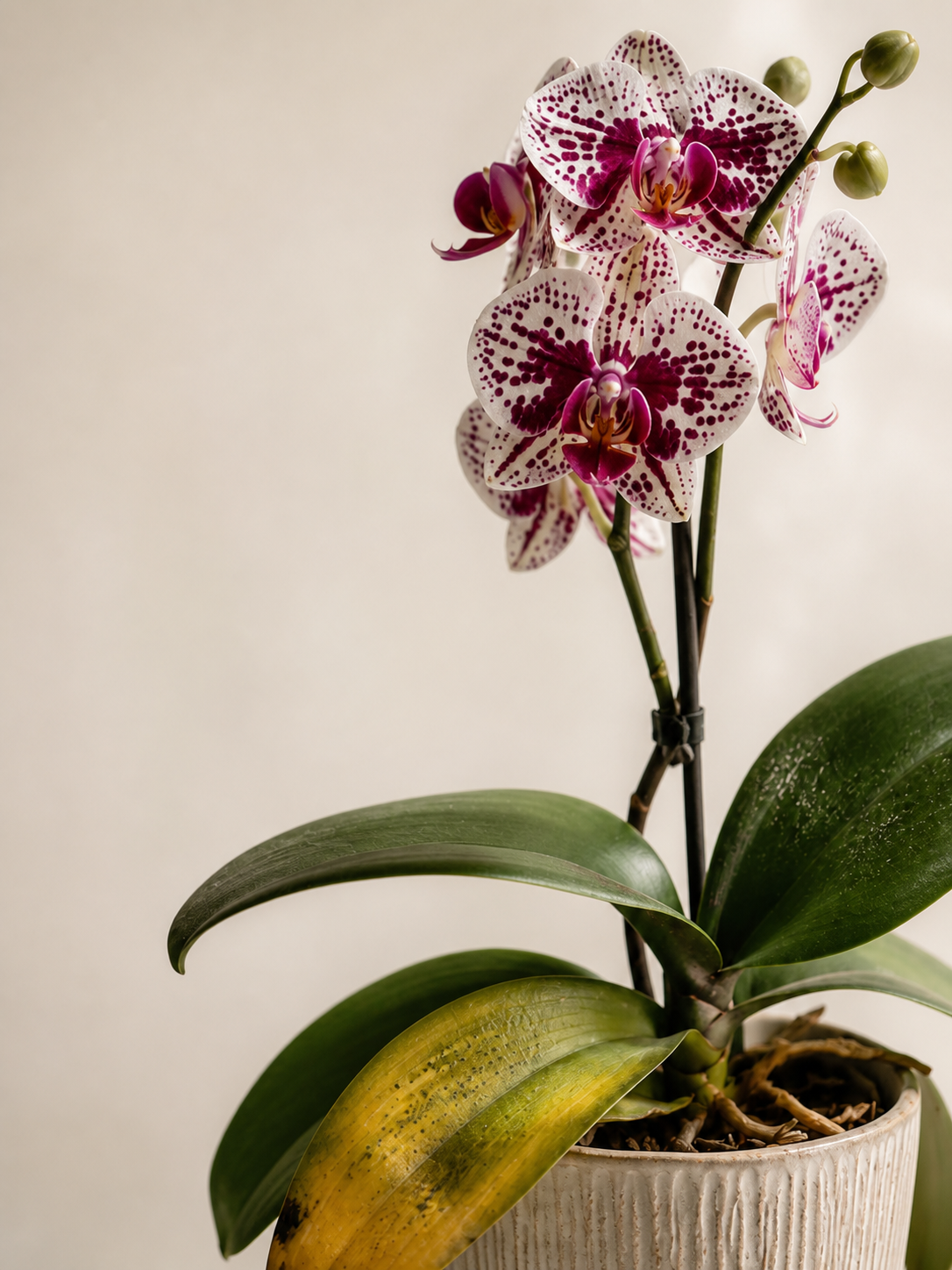
Phalaenopsis equestris Leaves Showing Clear Signs of Moderate Stress
Phalaenopsis equestrisPhalaenopsis equestris
DIAGNOSIS
This Phalaenopsis equestris is showing a moderate leaf-level problem: the foliage is under stress, but the plant is not beyond recovery. In orchids like this, leaf symptoms usually appear when light, moisture, airflow, or root function fall out of balance, so the leaves become the first place where strain is visible.
PLAN FOR THE COMING DAYS
- 01
Check roots and potting moisture before watering again.
- 02
Place the orchid in bright, filtered light.
- 03
Improve gentle airflow around leaves and roots.
- 04
Avoid abrupt care changes; stabilize conditions gradually.
FIELD NOTES
Why it happens
In *Phalaenopsis equestris*, leaves often tell the story before the rest of the plant does. A moderate leaf issue usually means the orchid has been coping with stress long enough for the foliage to react, but not so long that the whole plant has collapsed. The most common pattern is not a single dramatic cause, but a mismatch between basic conditions: inconsistent watering, reduced root efficiency, stagnant air, or light that is either too harsh or too weak.
Because phalaenopsis orchids store part of their working reserves in their leaves, any disruption in water uptake or energy balance tends to show there first. If roots stay too wet, they can lose function and stop supplying moisture efficiently. If the plant stays too dry for stretches, the leaves may also lose firmness and rhythm. When light levels are off, the orchid cannot regulate growth normally, and moderate stress begins to register in leaf texture, posture, or color.
How to recognize it
A moderate leaf problem is usually more than a cosmetic blemish but less than a full-system emergency. You may notice leaves looking tired, less taut, uneven in color, or generally out of balance compared with the plant’s usual appearance. The change is visible enough to warrant correction, yet the plant still has a reasonable chance to stabilize if conditions improve.
For *Phalaenopsis equestris*, it helps to think of the leaves as indicators rather than the whole diagnosis by themselves. Leaf stress often points back to the root zone, watering pattern, and the growing environment. If the foliage has changed but the crown remains intact and the plant is still structurally sound, the goal is careful course correction rather than aggressive intervention.
Recovery plan
Start by reviewing the orchid’s recent routine. Check whether the roots have been staying wet for too long, drying too hard between waterings, or sitting in stale conditions. Move the plant into bright, filtered light rather than direct harsh sun, and make sure air can move gently around the leaves and pot.
Avoid the temptation to overcorrect all at once. A stressed phalaenopsis usually responds better to steady, moderate improvements than to drastic changes. Support the roots, keep moisture consistent, and watch new growth more closely than old damage. Existing leaf marks may not fully disappear, but recovery is often visible in firmer texture and more stable foliage over time.
Prevention
The best prevention is consistency. *Phalaenopsis equestris* prefers a stable rhythm: adequate but not excessive moisture, breathable root conditions, gentle airflow, and reliable filtered light. When these basics stay balanced, leaf stress is much less likely to build into a larger problem.
For future care, use the leaves as an early warning system. Small changes in posture, firmness, or color often appear before decline becomes severe. Responding at that stage is what keeps a moderate issue from becoming a major one.
IN THE OWNER'S WORDS
“I thought the leaves just looked a little tired, but they were really asking for steadier conditions.”
COMMON QUESTIONS
0401Why are my Phalaenopsis equestris leaves looking stressed?
Leaf stress in Phalaenopsis equestris usually points to an imbalance in watering, root health, airflow, or light. The leaves often show trouble before the rest of the orchid does.
02Can a moderate leaf problem on Phalaenopsis equestris recover?
Yes. A moderate problem means the leaves are showing strain, but the plant can often stabilize if growing conditions are corrected in a steady way.
03Should I cut damaged orchid leaves?
Not automatically. If a leaf is still partly functional, it can still support the plant. Focus first on correcting care conditions rather than removing tissue too quickly.
04Does leaf stress mean the roots are unhealthy?
Not always, but roots are one of the first places to check. Poor root function often leads to leaf symptoms because the plant cannot manage water properly.