Phalaenopsis Leaves Losing Firmness and Looking Slightly Wrinkled
Phalaenopsis spPhalaenopsis sp
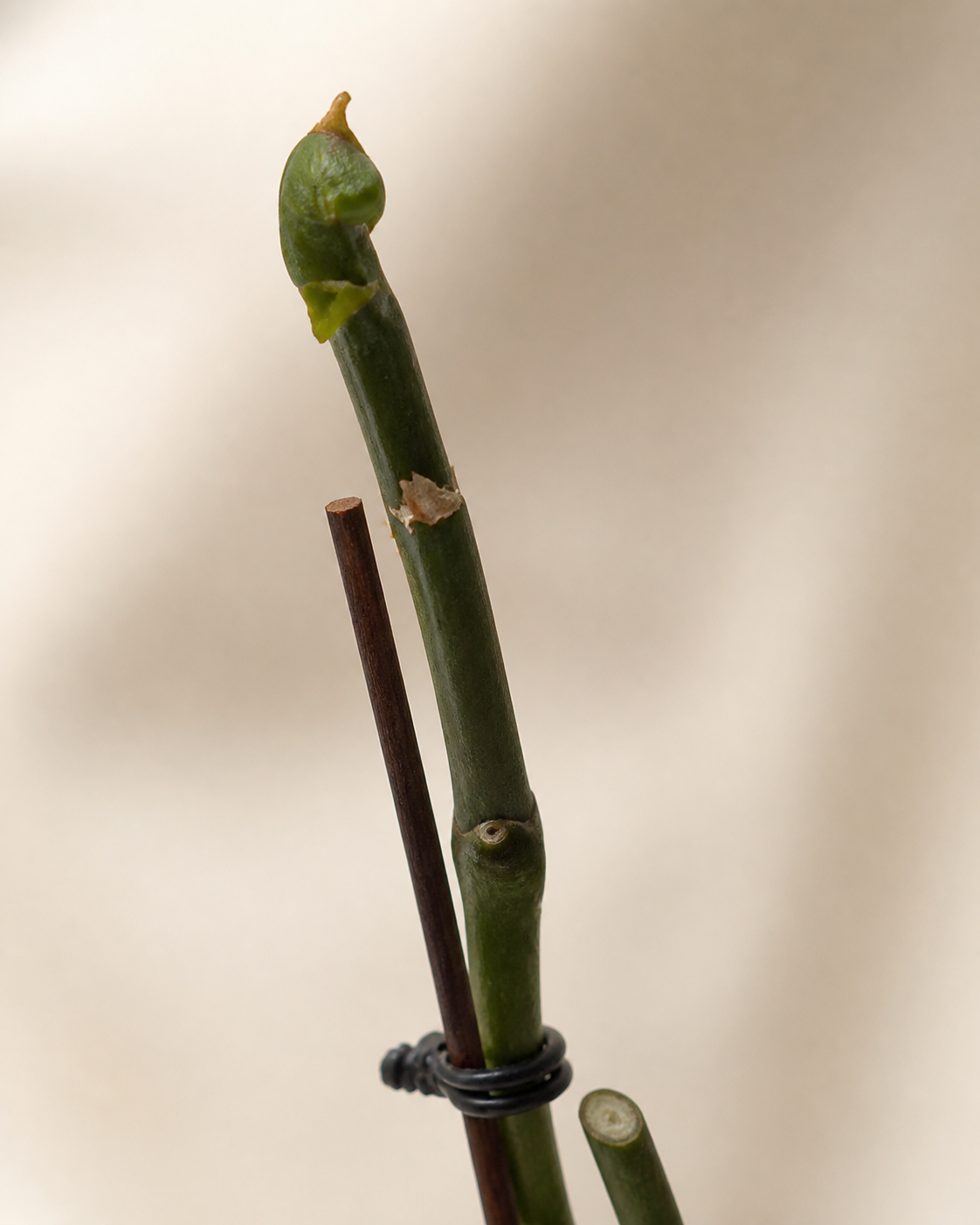
DIAGNOSIS
This Phalaenopsis sp. is showing a moderate alert consistent with water-balance stress, most often linked to impaired roots or inconsistent watering. When roots are not taking up moisture efficiently, the leaves gradually lose firmness and develop a lightly wrinkled surface.
PLAN FOR THE COMING DAYS
- 01
Inspect roots and potting medium before changing care.
- 02
Water thoroughly only when the mix approaches slight dryness.
- 03
Drain all excess water and avoid constant saturation.
- 04
Replace old compacted medium with a fresh airy orchid mix.
FIELD NOTES
Why it happens
In Phalaenopsis sp., leaves act as a visible reserve for water. When the root system is healthy, moisture moves steadily into the plant and the leaves stay smooth, firm, and slightly springy. A moderate alert appears when that balance starts to slip: roots may be stressed by staying too wet for too long, drying out too hard between waterings, breaking down in old compacted medium, or simply functioning unevenly after a change in environment.
Because Phalaenopsis roots do most of the hydration work, even a plant that is technically being watered can still behave as though it is thirsty. That is why leaf wrinkling does not automatically mean “add more water.” The underlying issue is often reduced uptake rather than pure lack of water. In editorial terms, this is less a dramatic collapse than a quiet signal that the plant is no longer moving moisture efficiently.
How to recognize it
The classic visual clue is loss of firmness in the leaves. They may look softer than usual, bend more easily, or show shallow wrinkles running along the blade. The change is often gradual rather than sudden. In a moderate case, the plant may still look broadly intact, but the foliage no longer has that plump, hydrated look associated with a stable root system.
This pattern matters because it helps separate routine cosmetic aging from a real care issue. One old lower leaf aging off is normal. Several leaves looking less turgid at once suggests a whole-plant water-balance problem. If the medium stays wet for a long time, roots may be struggling. If it becomes bone dry too often, the plant may also fail to maintain even hydration.
Recovery plan
Start with observation before correction. Remove the inner pot if possible and assess the root zone and potting medium. Healthy roots are usually firm; stressed roots may look collapsed, brown, or inactive. If the mix feels stale, dense, or slow to dry, that can explain why the leaves are signaling distress.
The goal is to restore consistency, not to overcompensate. Water thoroughly only when the medium has moved toward slight dryness, then let excess moisture drain fully. Avoid leaving the roots continuously saturated. If the medium has broken down, repotting into a fresh airy orchid mix can improve oxygen around the roots and help them resume normal function.
Prevention
Phalaenopsis responds best to a predictable rhythm. Stable temperatures, bright indirect light, and a breathable potting mix all support efficient water uptake. Once the roots recover, leaf texture often improves slowly rather than overnight, so watch for gradual stabilization instead of instant perfection.
A moderate alert is useful precisely because it appears before severe decline. Slight wrinkling and reduced firmness are early editorial clues: the plant is asking for steadier root conditions, not panic.
IN THE OWNER'S WORDS
“I thought the orchid was thirsty, but the soft wrinkled leaves made me realize the roots needed attention first.”
COMMON QUESTIONS
0401Why are my Phalaenopsis leaves wrinkled but still green?
Green but wrinkled leaves often indicate a water-uptake problem rather than immediate tissue death. The roots may be stressed by overwatering, underwatering, or degraded potting medium.
02Do wrinkled orchid leaves always mean the plant needs water?
No. In Phalaenopsis, wrinkling often means the plant cannot absorb water efficiently. Adding more water without checking the roots can worsen the problem.
03Can Phalaenopsis recover leaf firmness?
Yes, if the root function improves and watering becomes more consistent. Existing leaves may not become perfect again, but they often stabilize and new growth should look firmer.
04Should I repot a Phalaenopsis with soft leaves?
Repotting can help if the medium is old, compacted, or staying wet too long. Check the roots first and use a fresh airy orchid mix if the substrate has broken down.