Philodendron hederaceum Leaves Fading After Too Much Sun
Philodendron hederaceumPhilodendron hederaceum
DIAGNOSIS
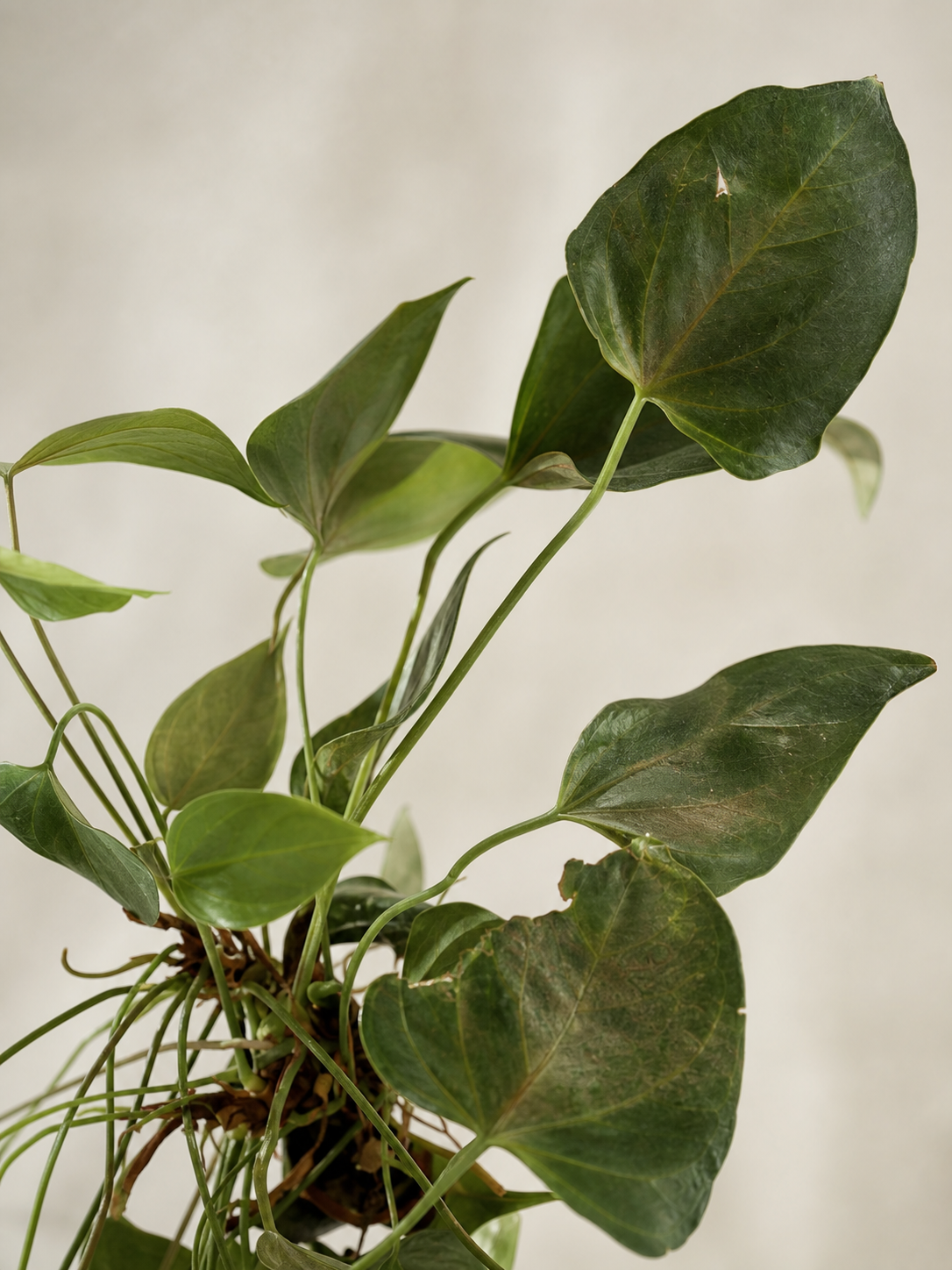
This Philodendron hederaceum is showing moderate sun stress. Excess direct light can overwhelm its leaf tissue, causing fading, dull patches, or lightly scorched areas as the plant struggles to protect itself.
PLAN FOR THE COMING DAYS
- 01
Move the plant out of direct sun.
- 02
Give it bright, indirect light instead.
- 03
Use a sheer curtain or increase distance from the window.
- 04
Keep watering steady and avoid extra stress.
- 05
Remove only leaves that are mostly damaged.
FIELD NOTES
Why it happens
Philodendron hederaceum is naturally adapted to filtered light rather than prolonged direct sun. When the plant sits in a bright window with harsh midday or afternoon exposure, the leaf surface can receive more light and heat than it is built to handle. At that point, chlorophyll begins to break down and the tissue loses its rich green tone, often looking washed out before stronger damage appears.
Moderate sun stress usually means the problem is noticeable but not catastrophic. The plant is still viable, yet some leaves may show pale areas, a dull cast, or dry patches where the sun hit most intensely. This is not the same as a watering issue or nutrient shortage: the pattern tends to appear on the most exposed foliage first.
How to recognize it
Sun damage on Philodendron hederaceum often starts subtly. Leaves may look lighter than usual, especially on the side facing the window. In stronger exposure, the color can shift from healthy green to yellowish-green or bleached-looking patches. Some sections may become thin, papery, or slightly crisp.
A useful clue is location. If the affected leaves are the ones closest to direct sun while shaded leaves remain healthier, excess light is the likely cause. Damage already present on the leaf will not reverse, but the overall plant can recover well once conditions improve.
Recovery plan
Move the plant out of direct sun and place it where the light is bright but indirect. That single adjustment usually does the most to stop further injury. If the plant has been growing in a harsh window, a sheer curtain or a position a little farther back from the glass can reduce the intensity enough.
Keep the rest of care stable while the plant rebounds. Avoid making multiple big changes at once. Continue normal watering, and do not rush to remove every marked leaf unless it is mostly damaged. Even imperfect leaves still help support recovery if they remain partly functional.
Prevention
The long-term goal is steady filtered light. Philodendron hederaceum can tolerate bright conditions, but direct midday sun is often too intense, especially indoors behind hot glass. Rotate the plant occasionally so one side does not take all the exposure, and watch new leaves for signs of paling.
If fresh growth emerges evenly green, the adjustment worked. Recovery is usually gradual, with improvement showing more clearly in new leaves than in old damaged ones.
IN THE OWNER'S WORDS
“I thought the brighter window would help, but the leaves started looking washed out within days.”
COMMON QUESTIONS
0401Can sun-damaged Philodendron hederaceum leaves turn green again?
No, damaged areas usually keep their altered color. Recovery is seen mainly in healthier new growth after the light is corrected.
02How much light does Philodendron hederaceum need?
It prefers bright, indirect light and usually does best away from prolonged direct midday sun.
03What does sun stress look like on Philodendron hederaceum?
Common signs include fading, dullness, pale patches, and dry or slightly crispy areas on the most exposed leaves.
04Should I cut off all scorched leaves?
Not necessarily. If a leaf still has enough healthy tissue, it can continue helping the plant recover.