Solanum lycopersicum Showing Tired, Troubled, Stress-Worn Tomato Leaves
Solanum lycopersicumSolanum lycopersicum
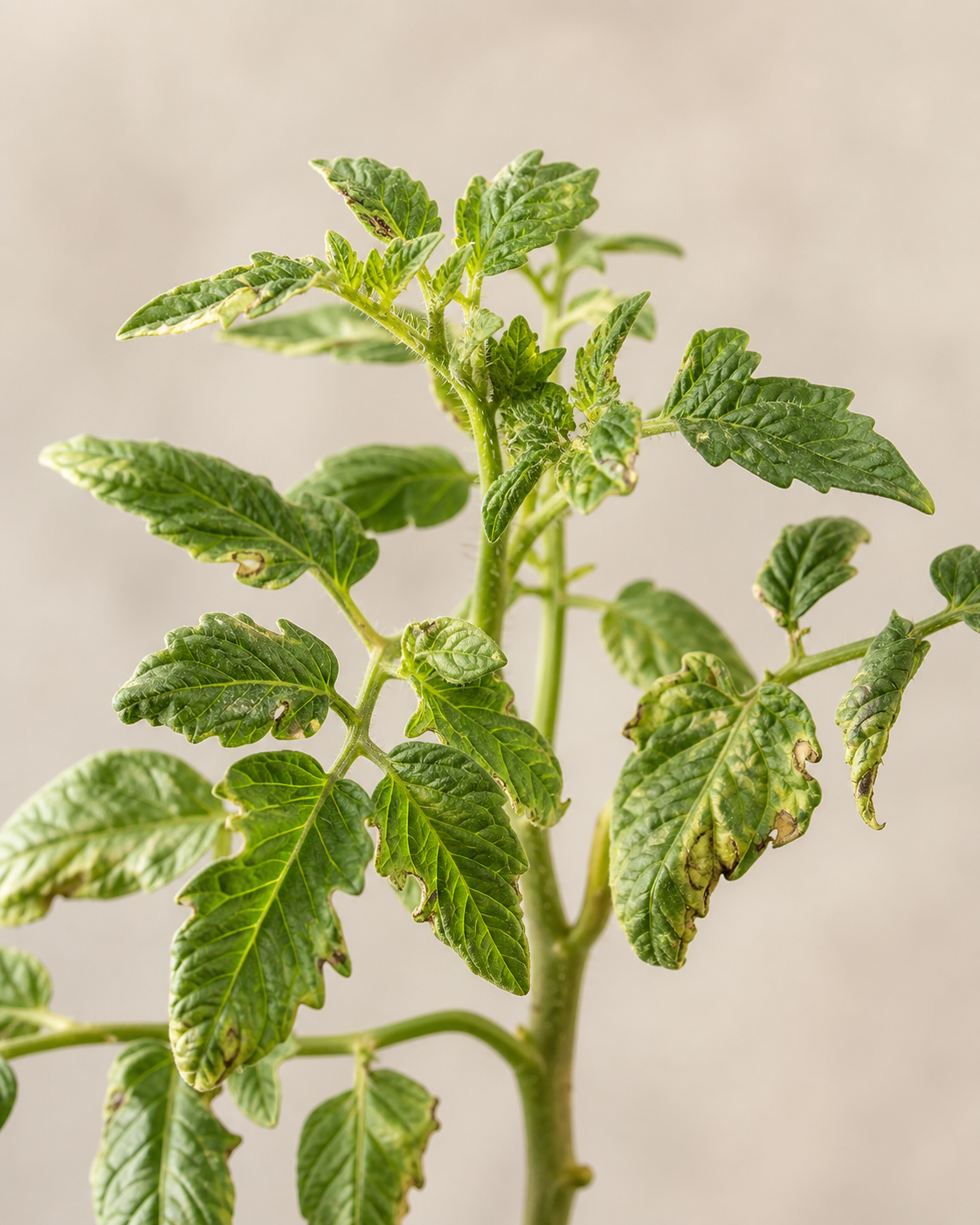
DIAGNOSIS
This Solanum lycopersicum is showing a moderate leaf-level problem rather than a whole-plant collapse. In tomatoes, leaf issues often develop when moisture, airflow, light, or nutrition fall out of balance, so the foliage is acting as the plant’s first warning system.
PLAN FOR THE COMING DAYS
- 01
Keep soil evenly moist, not waterlogged.
- 02
Improve airflow around the plant canopy.
- 03
Check that the plant receives consistent strong light.
- 04
Remove only the most damaged leaves.
- 05
Resume gentle, balanced feeding if care was irregular.
FIELD NOTES
Why it happens
In **Solanum lycopersicum**, the leaves usually react before the rest of the plant shows a clear decline. Tomato foliage is thin, fast-growing, and highly responsive to changes in its environment, so moderate leaf problems often point to stress rather than an irreversible failure. When watering swings between too dry and too wet, roots struggle to supply foliage evenly. When air circulation is poor, leaves stay damp longer and become more vulnerable to stress and spotting. If light is inconsistent or the plant is crowded, older leaves may weaken first.
Nutrition can also play a role. Tomatoes are heavy feeders, but they do best with steady, balanced access to nutrients rather than sudden excess. Too much fertilizer can stress leaf tissue, while too little can leave the plant unable to maintain healthy color and structure. Because the issue is currently moderate, the plant still has a good chance to recover if conditions are made more consistent.
How to recognize it
A moderate leaf issue in tomato plants often appears as foliage that looks tired, uneven, or visibly off before stems and fruit are seriously affected. You might notice discoloration, patchiness, curling, edge damage, or leaves that no longer look as firm and fresh as they should. The important point is that the symptoms are concentrated on the leaves: the plant is signaling stress, but it is not yet beyond help.
Look at the pattern, not just one damaged leaf. If several leaves show similar decline, especially in the same part of the plant, the cause is more likely environmental or cultural than accidental physical damage. Also pay attention to timing after watering, weather shifts, or feeding changes. Tomatoes often reveal those imbalances through their leaves first.
Recovery plan
Because the scanner result points only to a leaf-category problem, the safest response is to stabilize care rather than overcorrect. Aim for even soil moisture, giving the roots access to water without leaving them constantly saturated. Improve airflow around the plant so leaves dry more efficiently and heat does not build up around dense growth. Check whether the tomato is receiving sufficient light and whether surrounding plants are shading it more than expected.
Remove only the most compromised leaves if they are clearly declining, but avoid stripping the plant heavily all at once. Sudden pruning can create additional stress. If feeding has been irregular, return to a gentle, balanced routine instead of applying strong corrective doses. Over the next one to two weeks, watch new growth closely: healthy new leaves are often the clearest sign that the plant is responding well.
Prevention
Tomatoes stay steadier when their care stays steady. Regular watering, breathable spacing, and moderate feeding usually prevent leaf trouble from escalating. The goal is not perfect foliage at every moment, but a growing plant that can replace stressed leaves with healthy new ones under consistent conditions.
IN THE OWNER'S WORDS
“I thought it was just a few shabby leaves, but the plant was clearly asking for steadier conditions.”
COMMON QUESTIONS
0401Why are my Solanum lycopersicum leaves looking unhealthy?
Tomato leaves often show stress first when watering, airflow, light, or nutrition become inconsistent. A moderate leaf problem does not always mean the whole plant is failing, but it does mean conditions should be reviewed.
02Can a tomato plant recover from moderate leaf damage?
Yes, if the growing conditions are stabilized early. Healthy new growth over the next one to two weeks is usually the best sign of recovery.
03Should I remove damaged tomato leaves?
Remove only the most compromised leaves. Taking too many at once can add stress and reduce the plant’s ability to recover.
04Does overwatering cause tomato leaf problems?
Yes, repeated overwatering or constant soggy soil can stress roots and lead to leaf decline. Wide swings between dryness and excess moisture can create similar symptoms.